Hasselblad XPan value & buyer’s guide
bossFoto › Values › Hasselblad XPan
Camera · 1998–2006 · 35mm film (24x36mm standard and 24x65mm panoramic) · Hasselblad XPan / Fuji TX mount
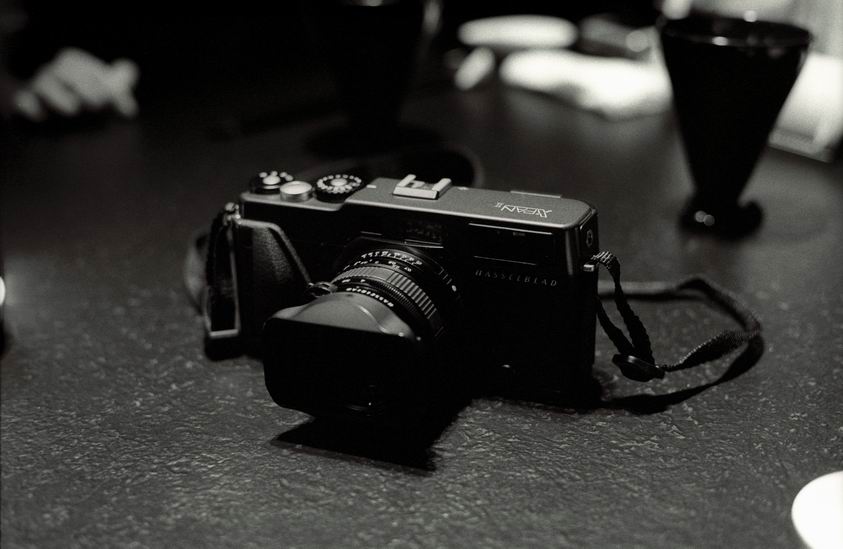

The Hasselblad XPan is an iconic 35mm rangefinder camera designed to capture both traditional standard frames and wide 24x65mm panoramic photos on standard 35mm film cassettes. Photographers highly seek it today for its authentic cinematic aspect ratio, top-tier optical quality, and compact handheld mobility compared to bulky medium-format panoramic systems.
How to identify a Hasselblad XPan
The XPan features a dark charcoal titanium alloy shell over an aluminum chassis with a front-mounted Hasselblad badge and top control dials. The camera serial number is located on the bottom plate. It is often confused with its mechanically identical twin, the champagne-finished Fujifilm TX-1, or the later XPan II which adds updated electronic controls.
Versions and how to tell them apart
| Version | Years | How to tell |
|---|---|---|
| XPan (Original) | 1998–2002 | Front-mounted manual ISO selector dial and a simpler rear LCD display without viewfinder shutter speed readouts. |
| XPan II | 2003–2006 | Rear LCD panel incorporating exposure compensation and ISO settings, along with viewfinder shutter speed display. |
What to check before buying
- Inspect the rear LCD screen panel for missing segments, fading, or black liquid crystal bleed.
- Verify smooth rangefinder focusing, checking for accurate horizontal and vertical patch alignment at infinity.
- Toggle format switching between standard and panoramic modes to ensure internal viewfinder blind curtains move smoothly without sticking.
- Test automated film loading and motorized pre-winding behavior with a dummy film cartridge.
- Examine shutter curtain surfaces for pinholes, deformation, or uneven movement across all manual speeds and aperture-priority mode.
- Check exterior camera body paint for flaking or peeling, especially around edges, corners, and strap lugs.
- Inspect lens aperture ring detents and focusing action, confirming optical elements are free from haze, fungus, or element separation.
Known issues
- Electronic circuit board degradation or component failure causing unresolvable system error readouts like error 8888.
- Exterior paint wear and flaking on the titanium outer casing due to delicate factory paint bonding.
- Rear LCD screen bleed over prolonged storage periods.
- Rangefinder mechanism misalignment resulting from physical impacts.
- Limited availability of original replacement electronic parts and specialized repair technicians.
What affects the price
- Model generation: XPan II bodies command a price premium over original XPan models due to enhanced exposure readouts.
- Lens bundle: Systems bundled with the rare 30mm f/5.6 ultra-wide lens and external viewfinder sell for significantly higher prices.
- Cosmetic paint condition: Minimal paint flaking or chipping on the dark grey exterior increases resale value.
- Accessories: Original packaging, lens hoods, and dedicated center filters raise overall kit value.
Specifications
| Film Format | 35mm film (24x36mm standard and 24x65mm panoramic) |
|---|---|
| Lens Mount | Hasselblad XPan bayonet mount (rangefinder coupled) |
| Shutter Type | Electronically controlled focal plane shutter |
| Shutter Speeds | 8 seconds to 1/1000 second plus Bulb mode |
| Exposure Modes | Aperture Priority AE and manual exposure |
| Metering System | TTL center-weighted light metering |
| Viewfinder | Optical rangefinder with automatic parallax and frame mask adjustment |
| Power Source | Two CRV2 or two CR123A 3V lithium batteries |
| Weight | Approximately 950 g (body only) |
Questions people ask
Is the Hasselblad XPan worth buying today?
For photographers wanting true panoramic 35mm frames without relying on crop masks, the XPan delivers unmatched quality. However, buyers should balance high market prices against potential electronic repair difficulties due to scarce replacement parts.
What batteries and film does the Hasselblad XPan use?
The camera operates using two 3V CRV2 or CR123A lithium batteries and loads standard 35mm film rolls, capturing approximately 20 to 21 panoramic exposures per 36-exposure cassette.
How does the Hasselblad XPan compare to the Fujifilm TX-1?
Both models feature identical internal mechanics, optics, and electronics produced by Fujifilm in Japan. The key differences lie in branding, exterior finish (dark grey paint for Hasselblad versus silver titanium for Fujifilm), and original regional sales distribution.
How can I verify a used Hasselblad XPan works before buying?
Insert fresh batteries to test shutter speeds in manual and auto modes, switch formats to confirm viewfinder frame masks operate properly, check the rear LCD for display bleeding, and load dummy film to test the motorized film transport.
Have one in front of you? bossFoto reads the engravings in a few photos, tells you the exact version, grades the condition and gives you a value.
Scan it with bossFoto →Sources
Related guides
Canon A-1 · Canon AE-1 Program · Canon AE-1 · Canon AV-1 · Canon Canonet QL17 GIII · Canon EOS 3 · Canon EOS 5D Mark II · Canon EOS 5D Mark III
Prices are estimates from recent sold listings and move over time. Condition, completeness and the exact version matter, so check an item in person before paying. Last checked November 2026.