There is a profound alchemy in the act of surrendering silver halide to the dark. Long before the shutter clicks, the chemistry is a silent promise — a pact made between the hurried pulse of the street and the cold, unyielding mechanics of a brass-tooled body. When three distinct vintage metal anatomies — the steadfast Asahi Pentax Spotmatic F, the surgical Canon Canonet QL17 GIII, and the austere, punishing precision of the Nikon FM2n — return from the field, they carry more than mere latent images. They carry time itself. Inside those heavy chambers, the exposures split like branching rivers: the warm, honeyed latitude of Kodak Gold soaking up tropical afternoons, contrasted against the stark, charcoal-veined shadows of Kentmere 400 biting into monochrome grain.
To release those ghosts from their canisters, one does not simply drop film off at a counter; one makes a pilgrimage to a sanctuary where modern haste is gently shown the door. Tucked away within the lived-in, beating rhythm of Taman Paramount, Zontiga exists as an architectural breath in a suffocatingly digital world. It is a physical manifestation of an analog rebellion, carved out of warm timber, muted yellow light, and the quiet reverence of paper.
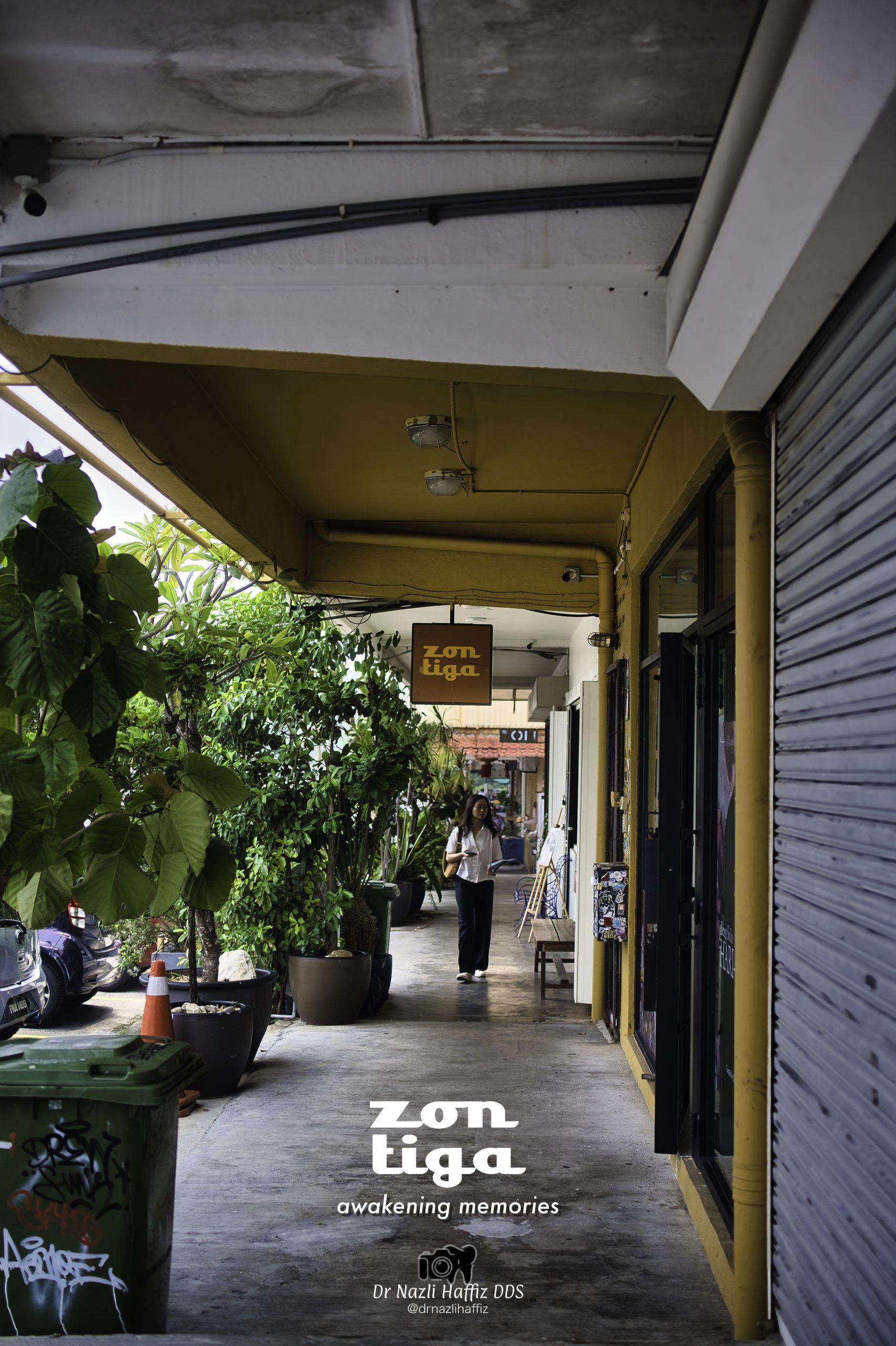
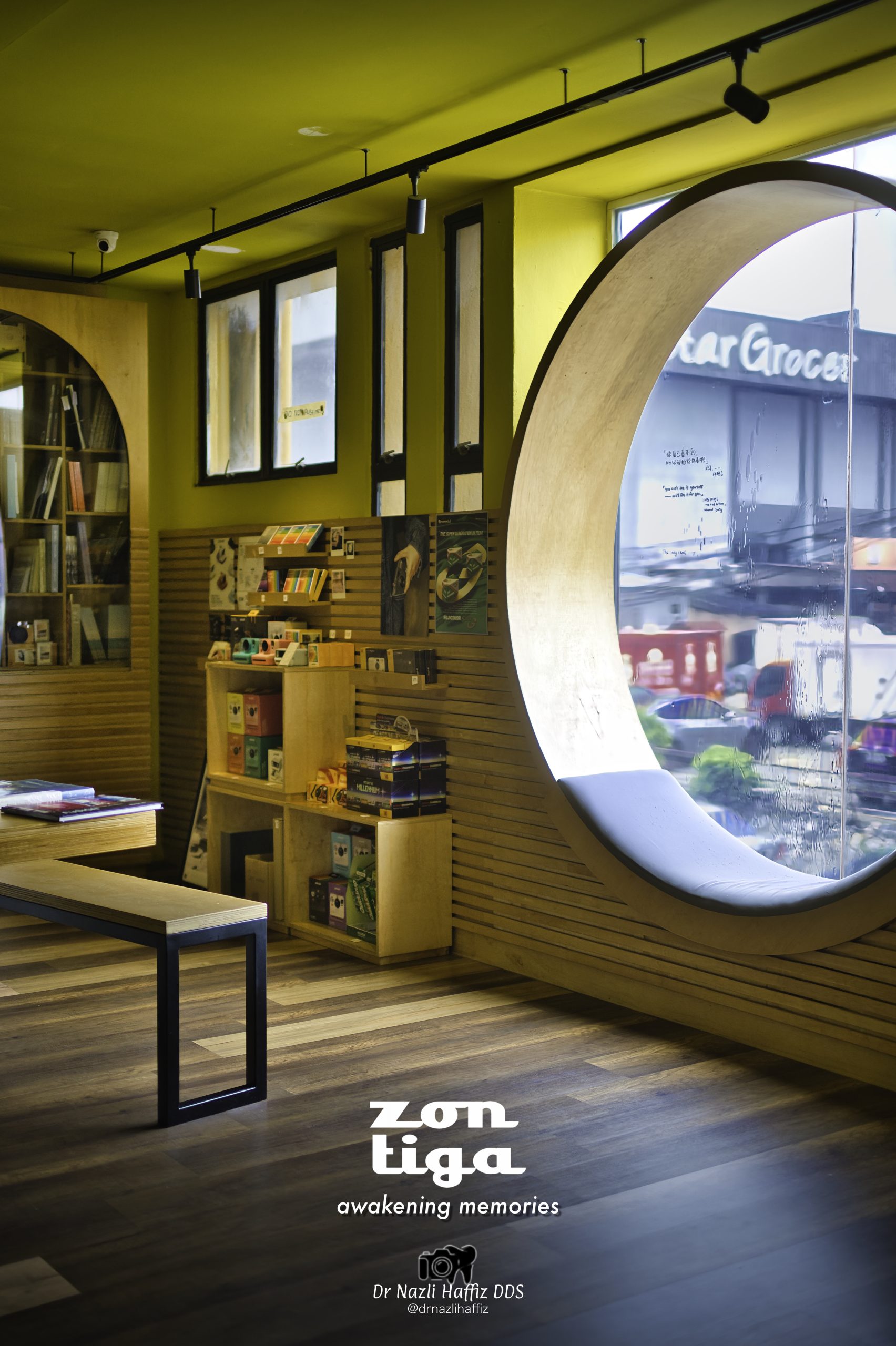
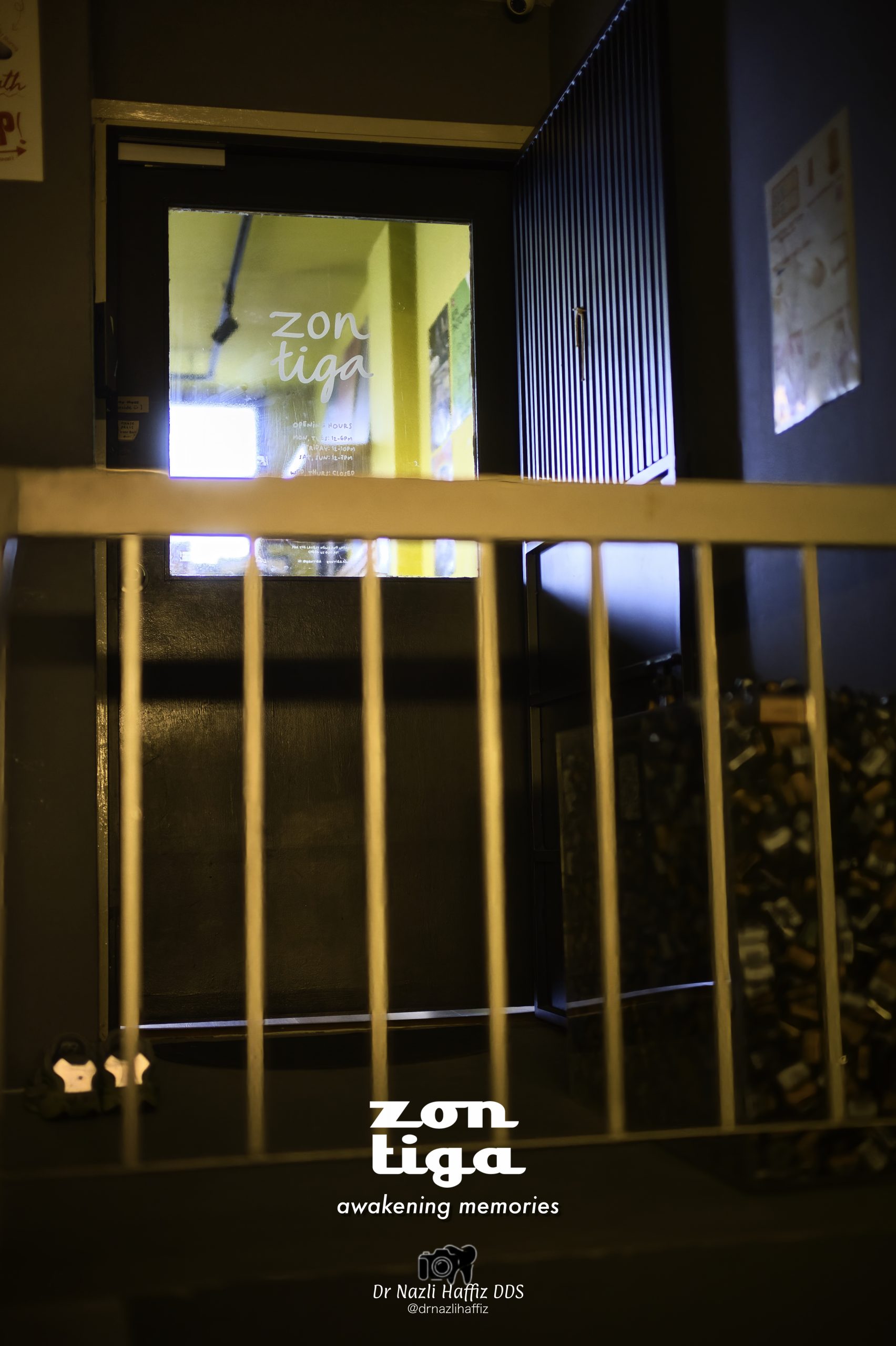
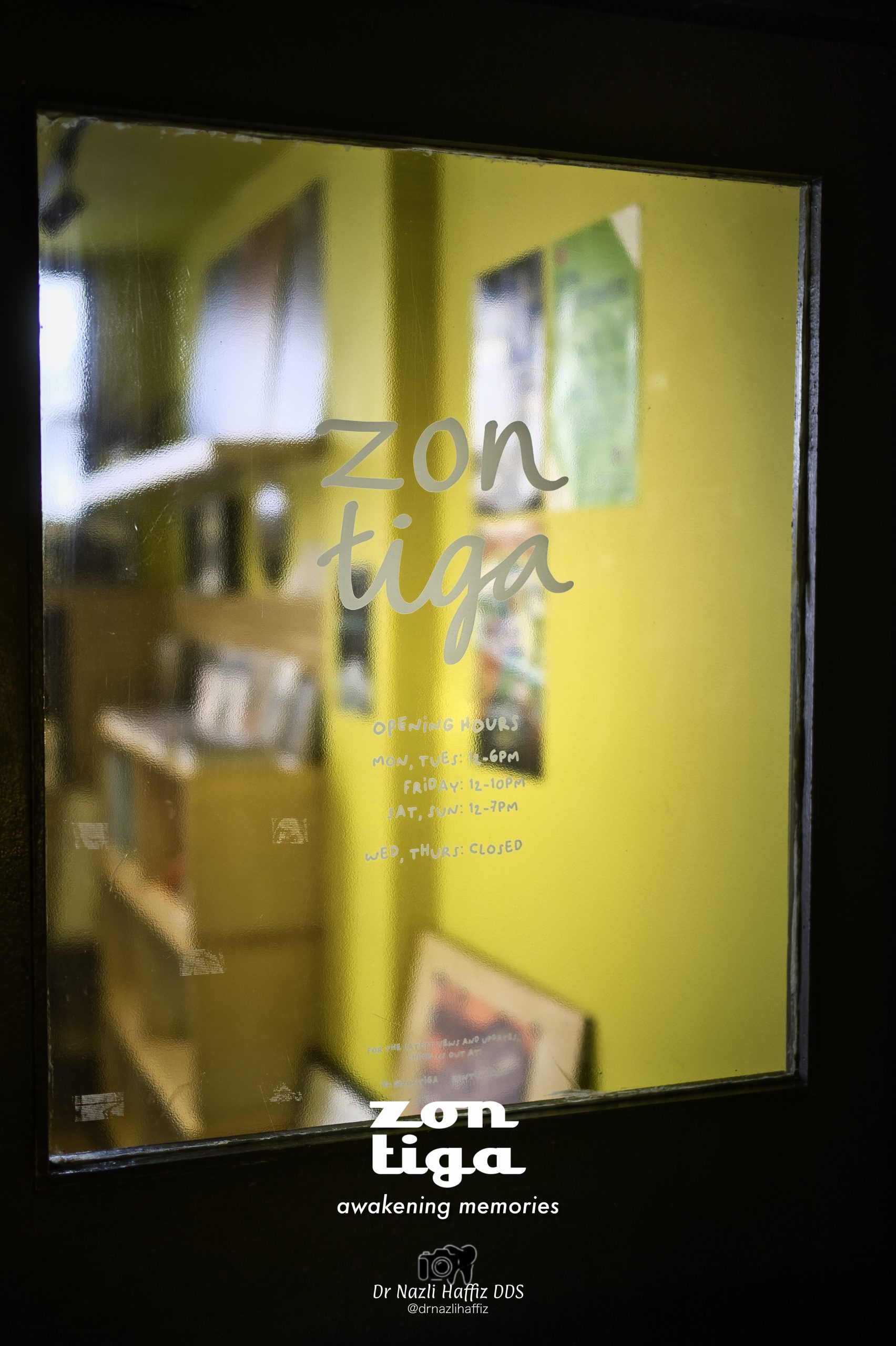
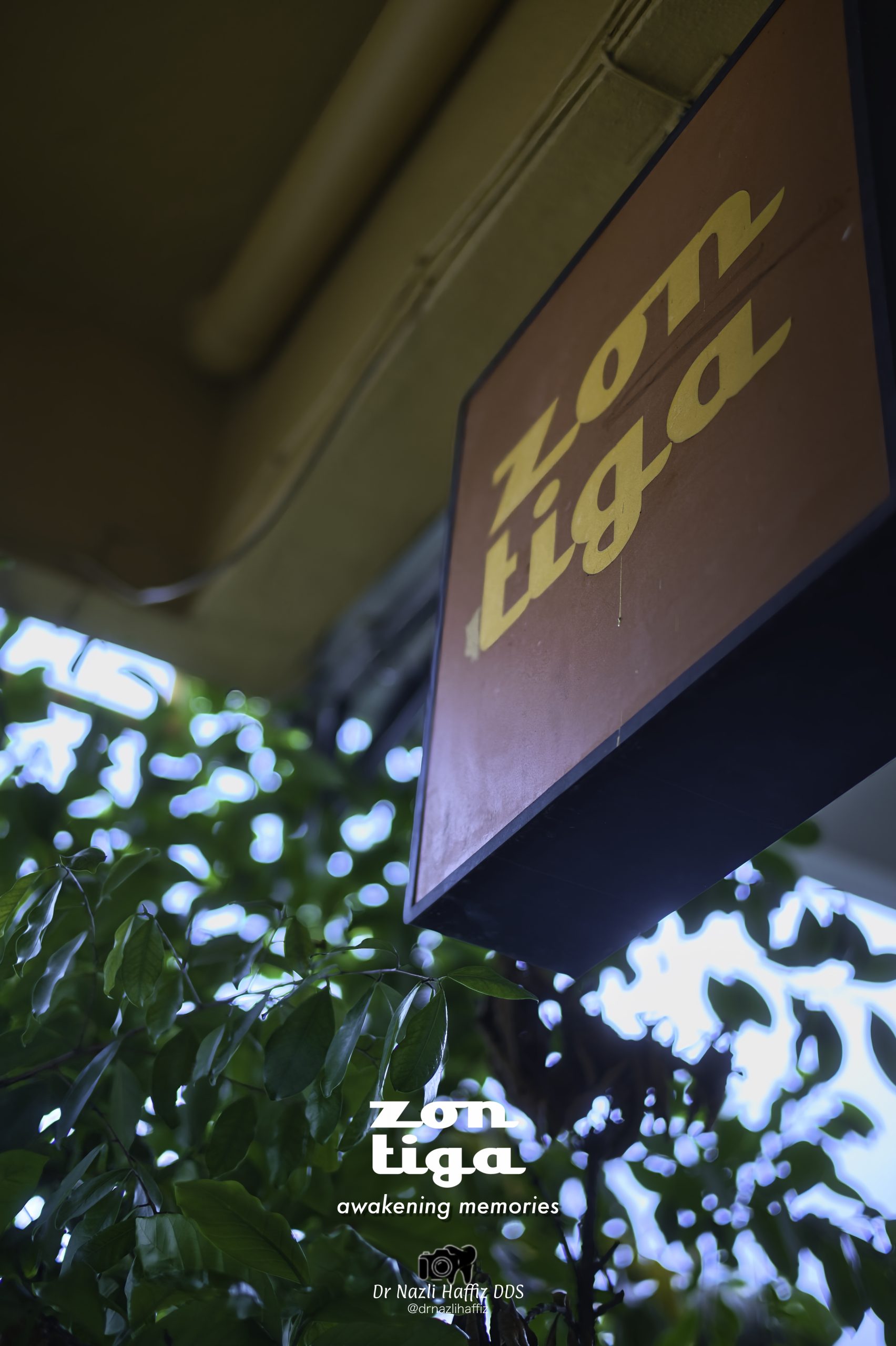
Walking down the shaded five-foot way, the world hushes as the suspended wooden sign — framed by the defiant green canopy of tropical leaves — sways in the afternoon heat. Step across the threshold through the glass door, and the air itself changes. It smells of fresh archival paper, metallic developer, and old emulsion. Your eyes are immediately drawn to the architectural anchor of the space: a striking, circular wooden window cut like a moon gate into the wall, framing the slow, unfiltered theater of the street outside while amber light washes across the floorboards.
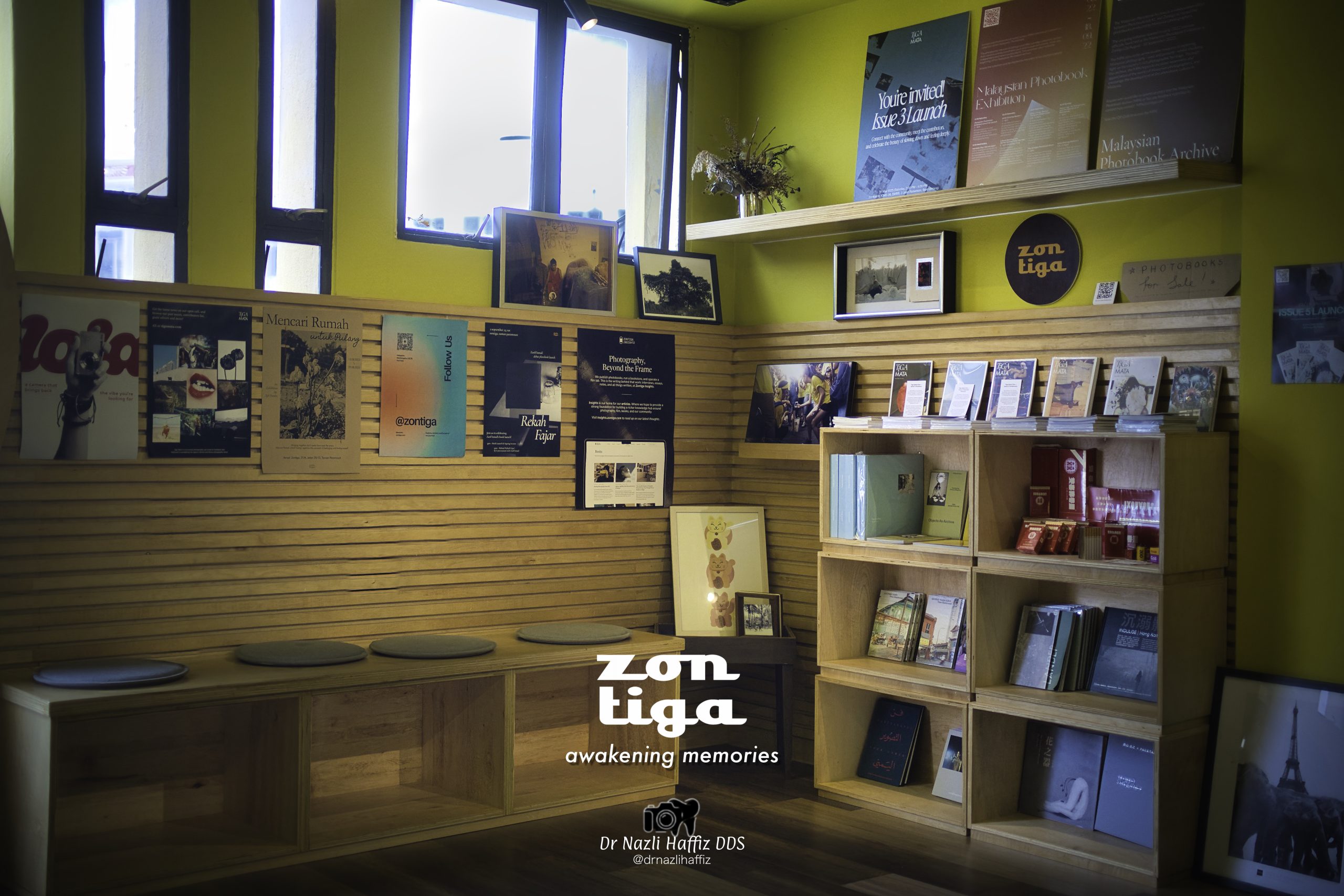
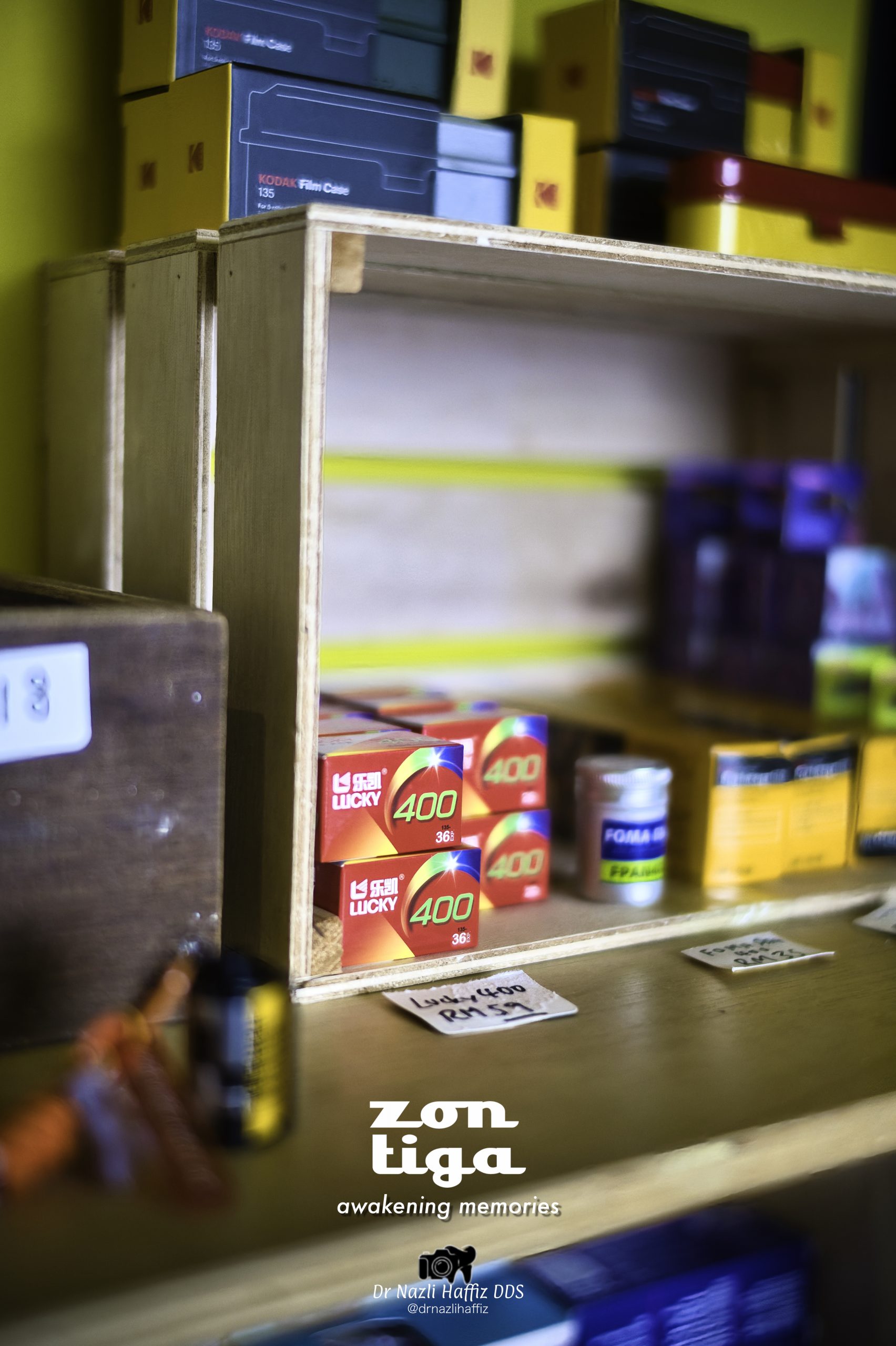
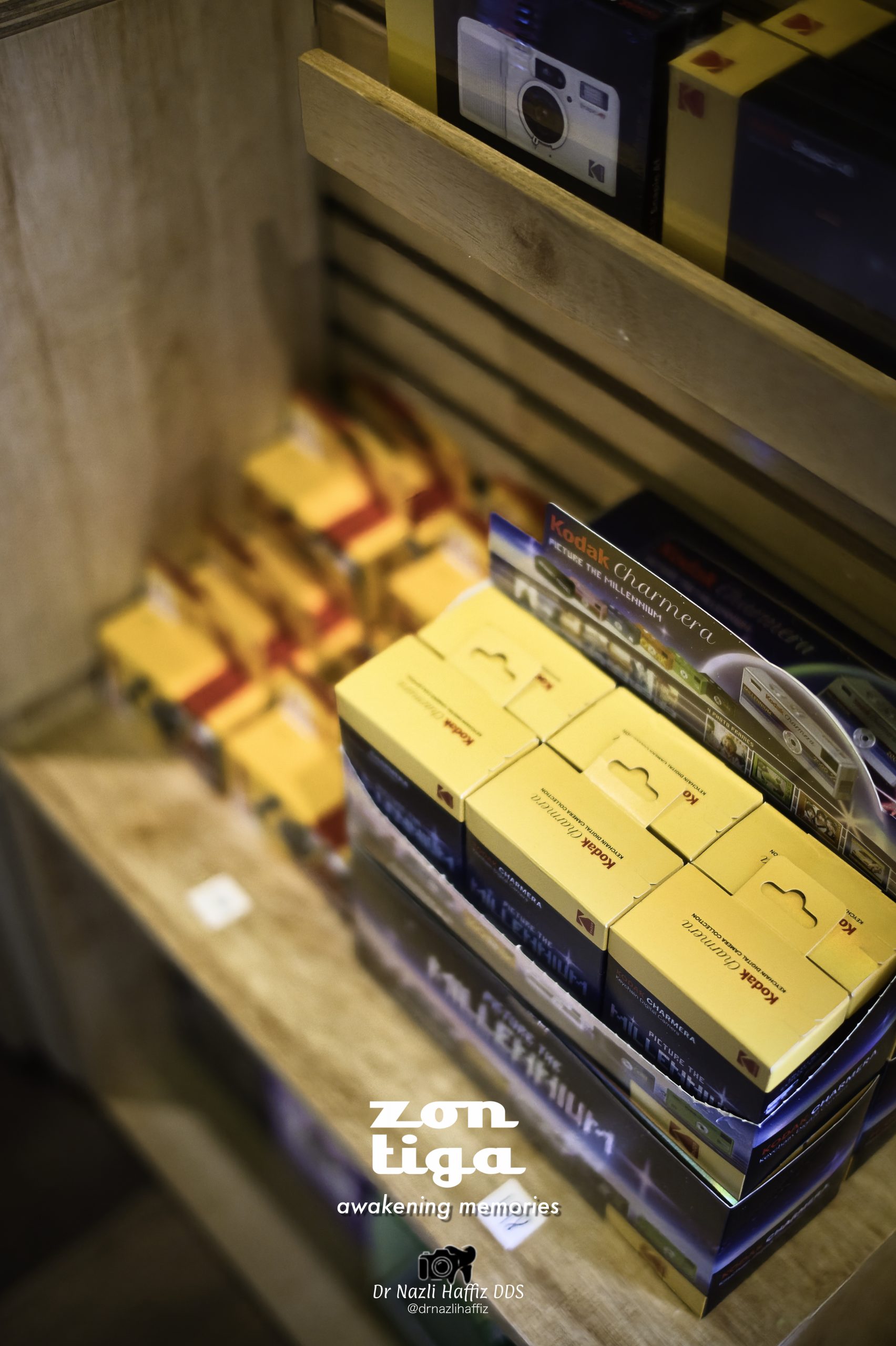
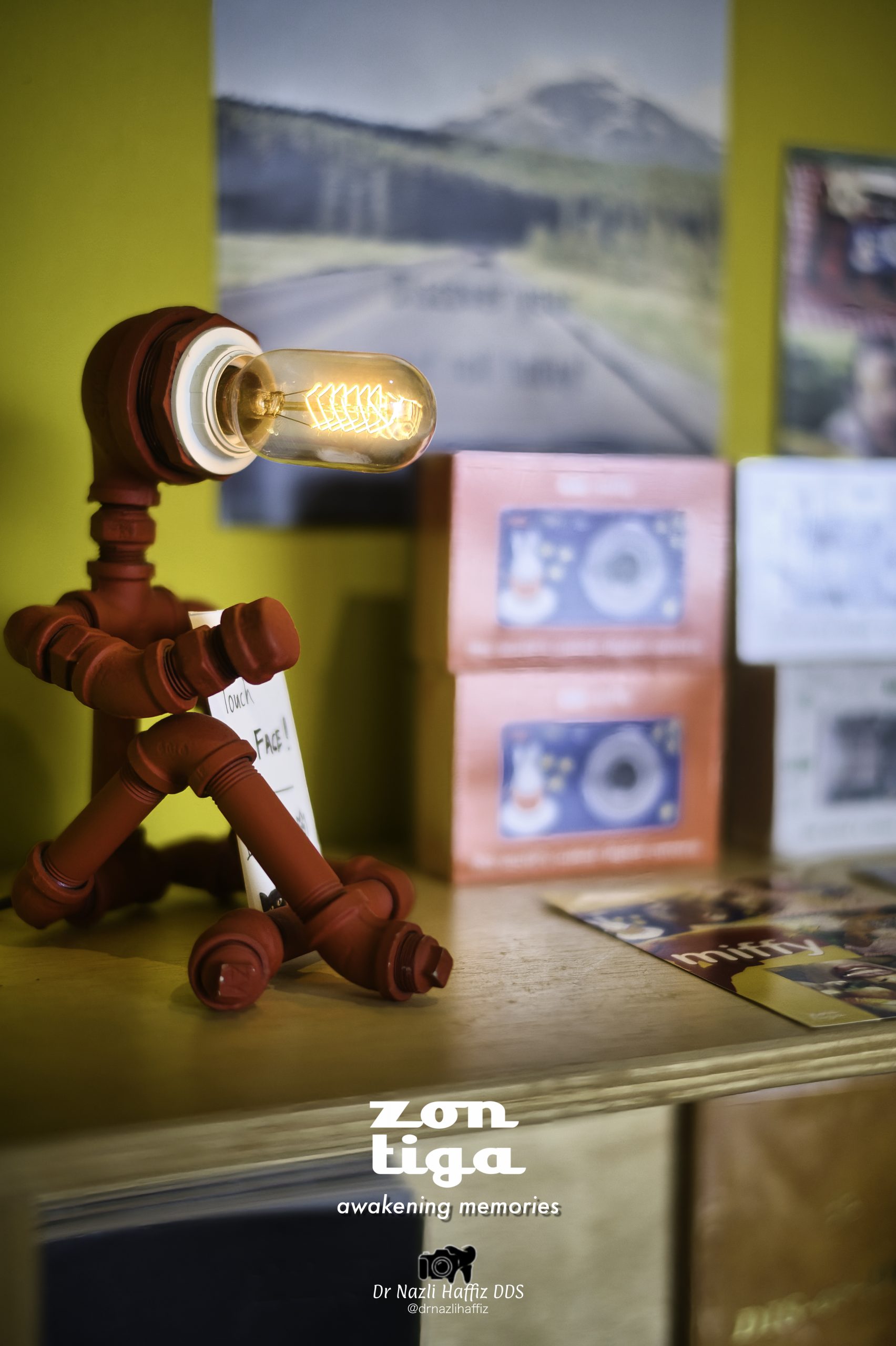
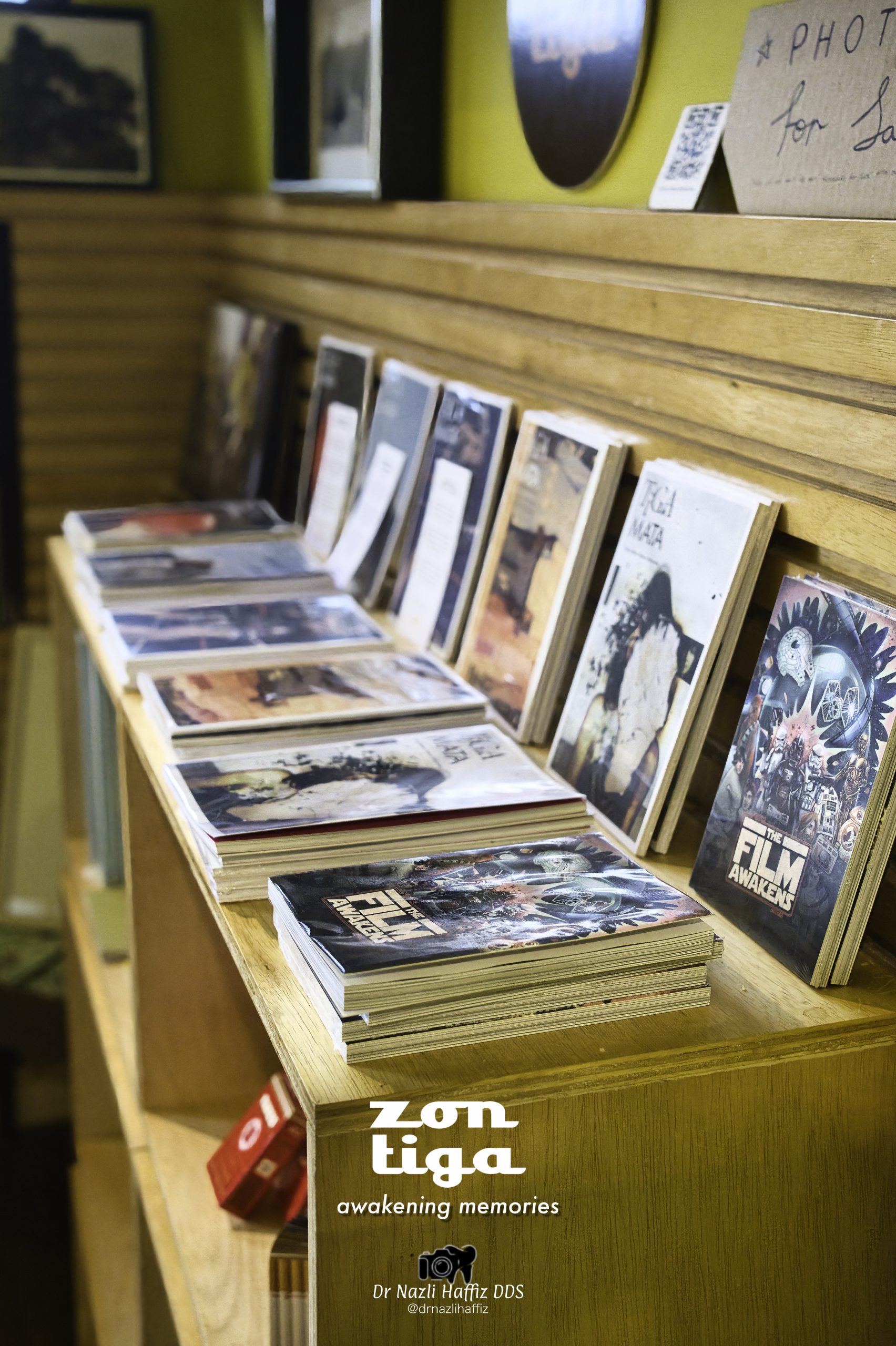
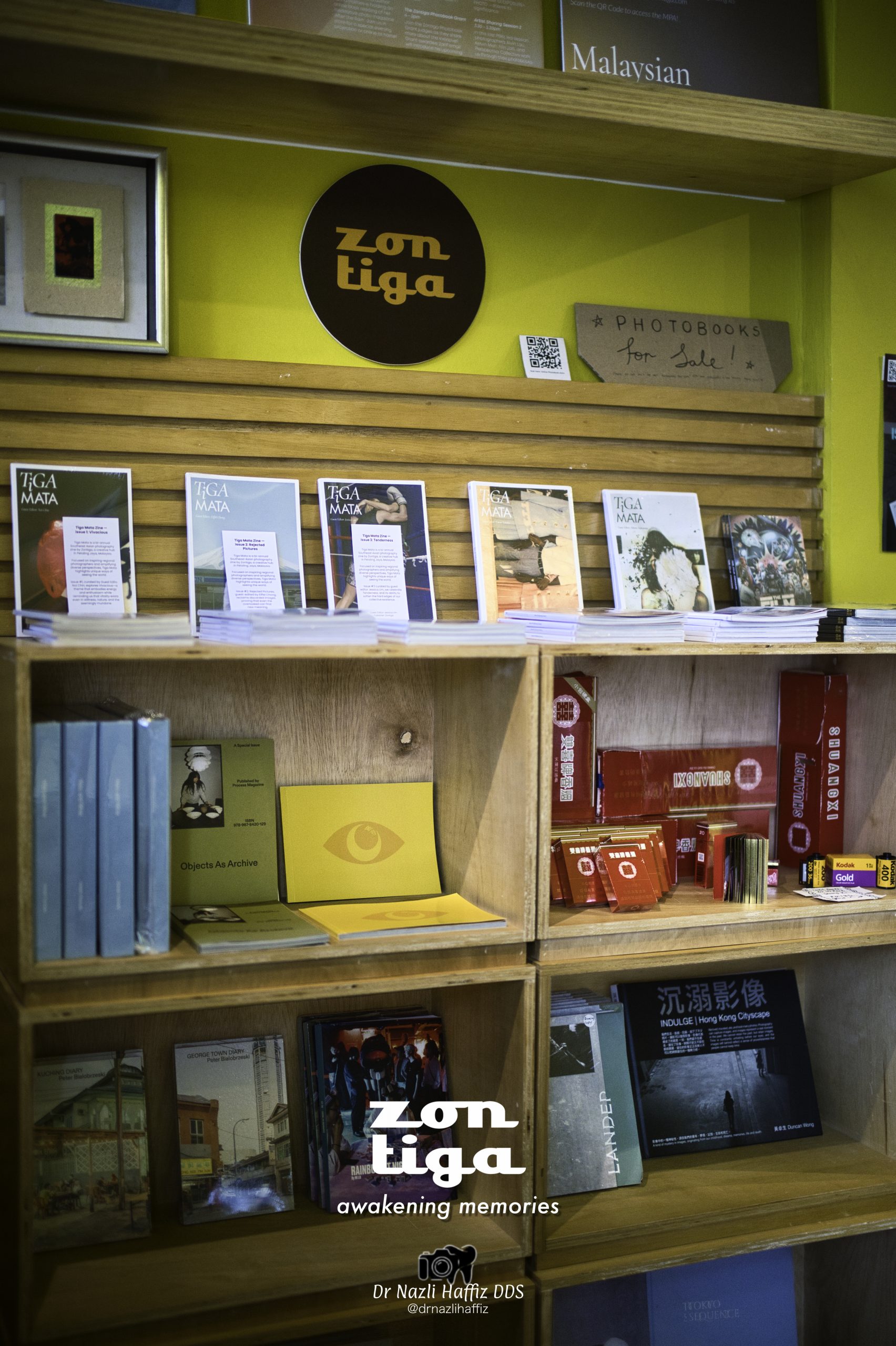
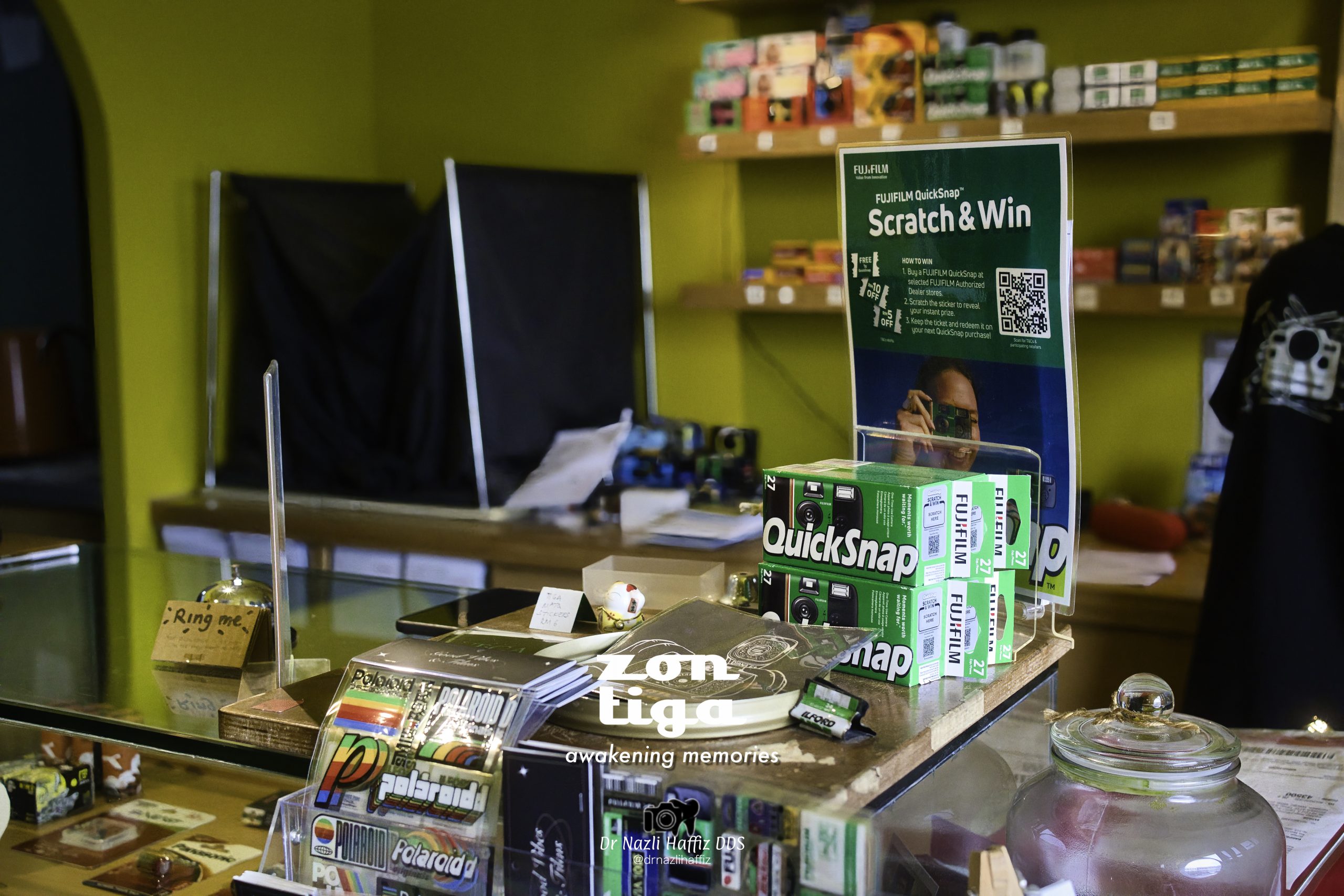
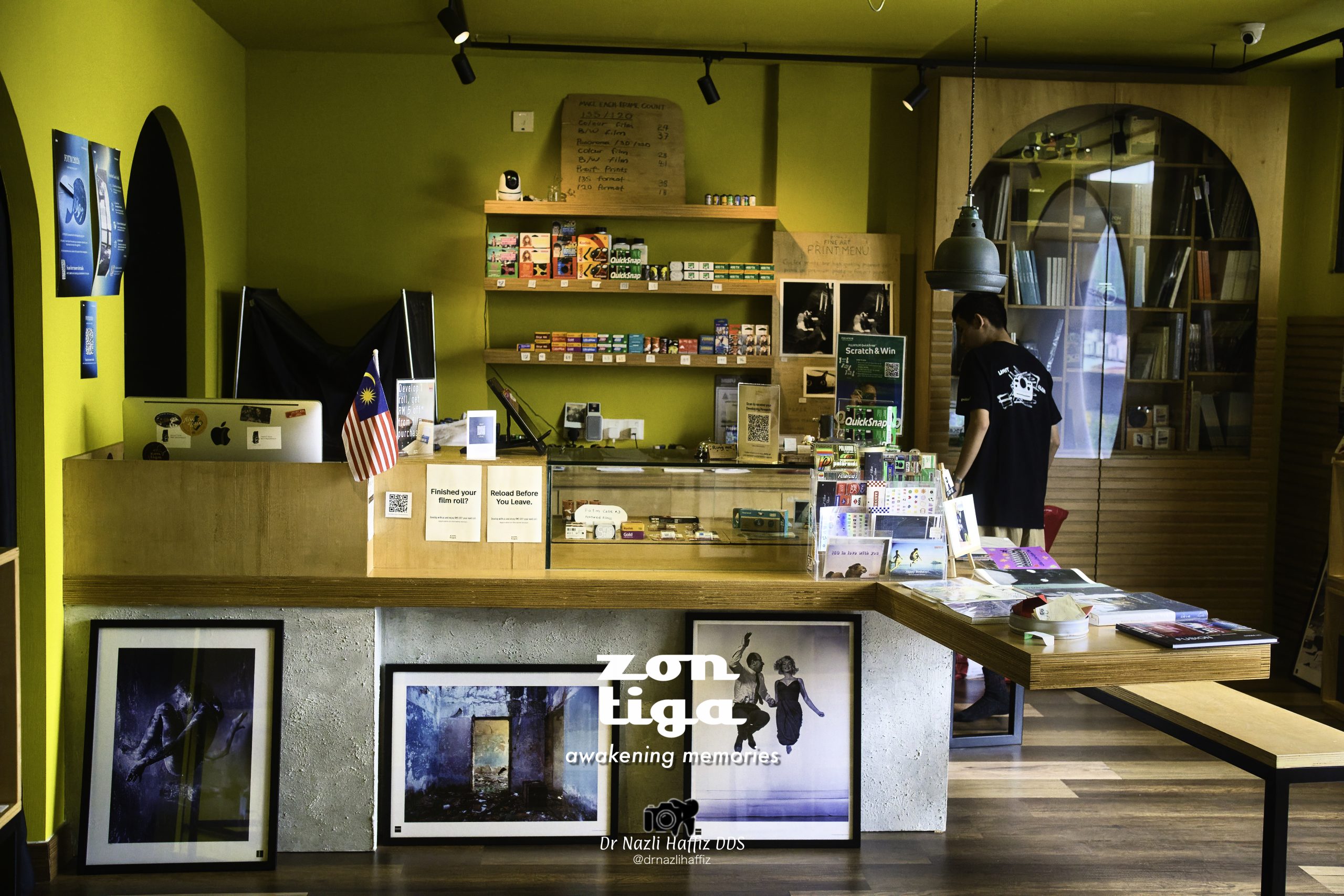
Every corner of the room whispers a different chapter of the photographic obsession. Shelves aren’t merely stocked; they are curated like cabinets of curiosities. Independent photobooks and raw, homegrown zines lean against one another under the banner of “The Film Awakens,” chronicling the untold stories of a generation refusing to let memory be compressed into pixels. Nearby, a handcrafted red pipe-fitting lamp bends over the timber counter like an industrial sentinel, casting a warm, bleeding glow over a sea of fresh film boxes — Lucky 400, Foma, and brick-red cartons waiting for an empty camera back.
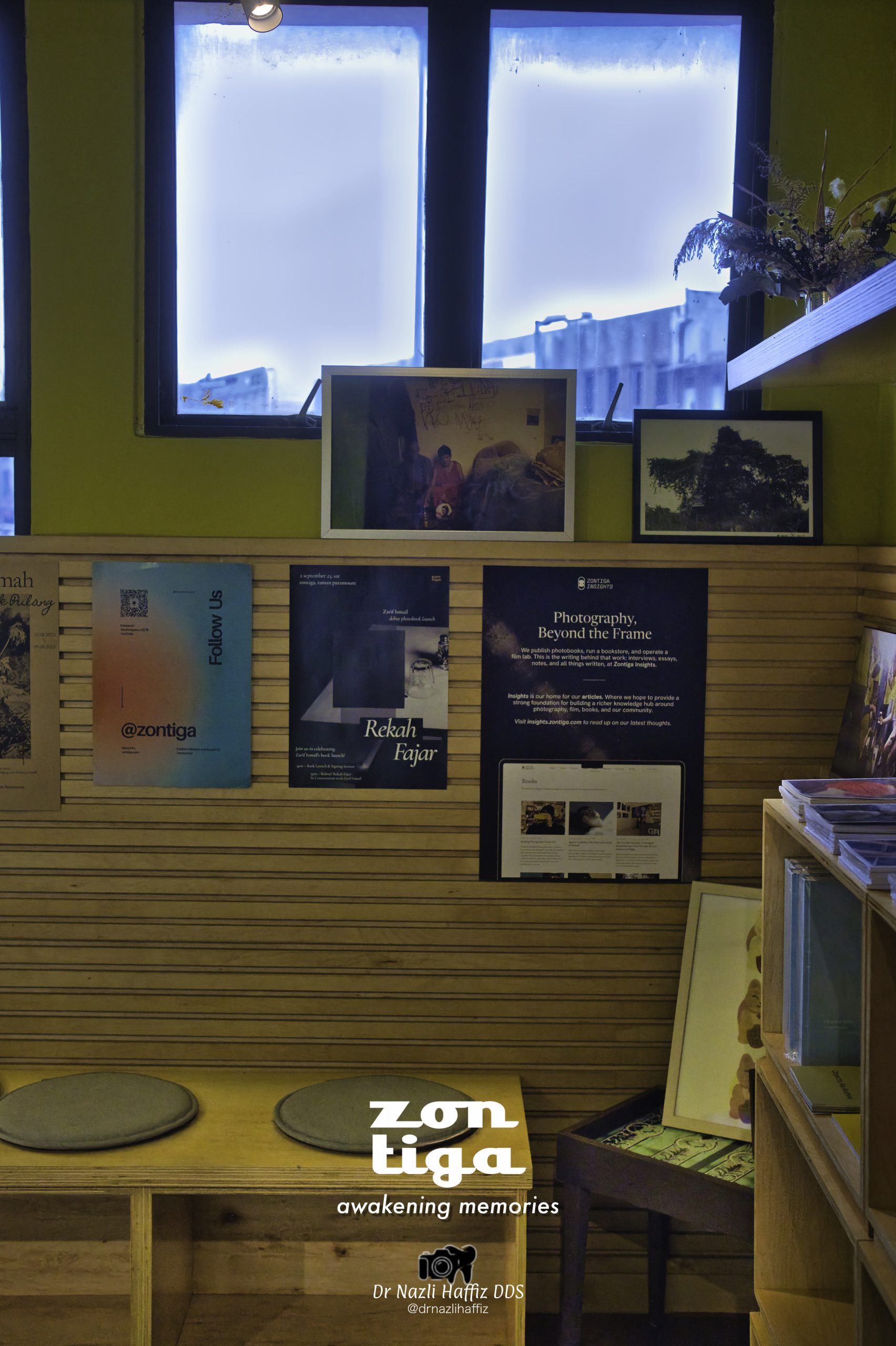
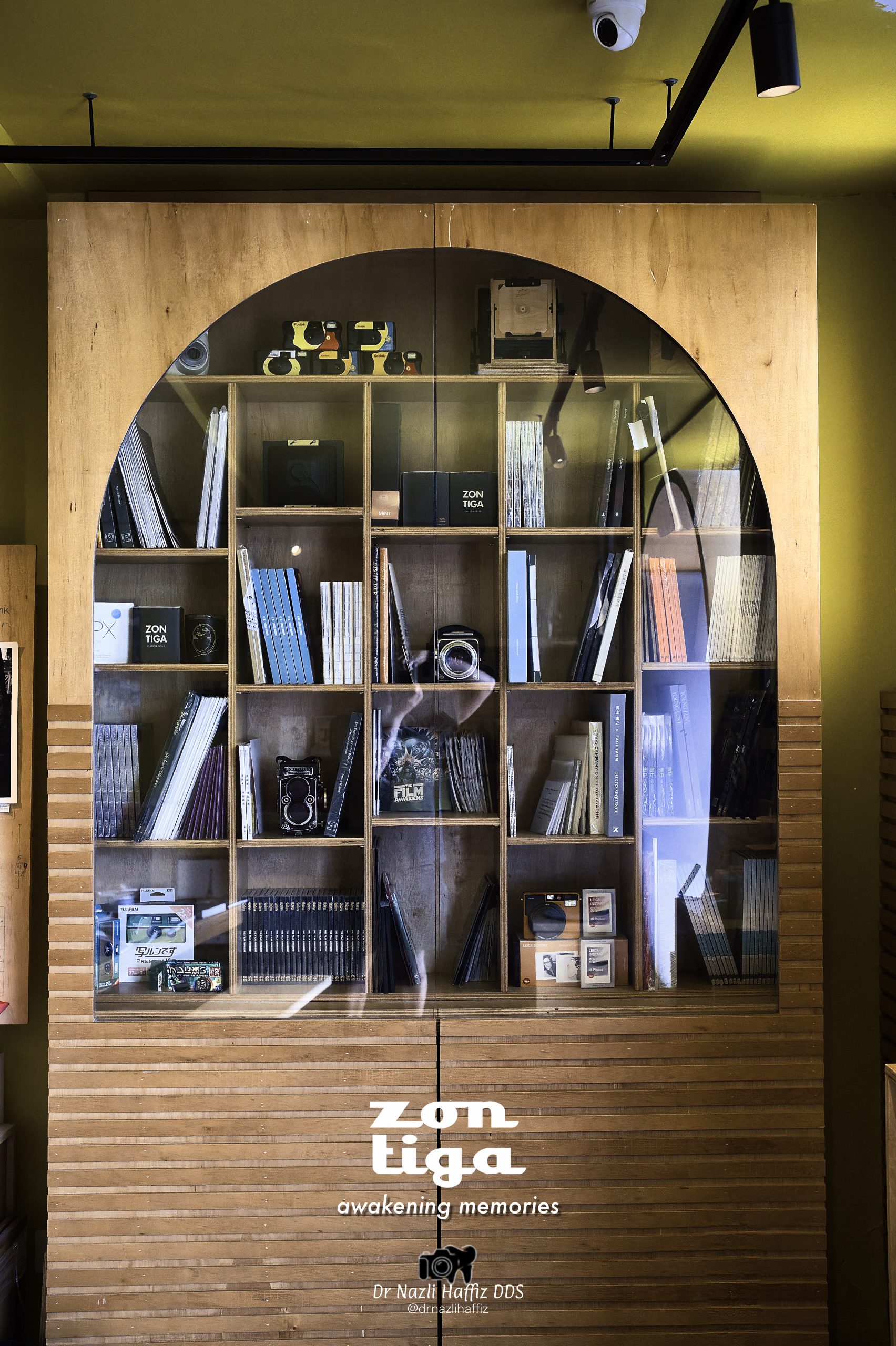
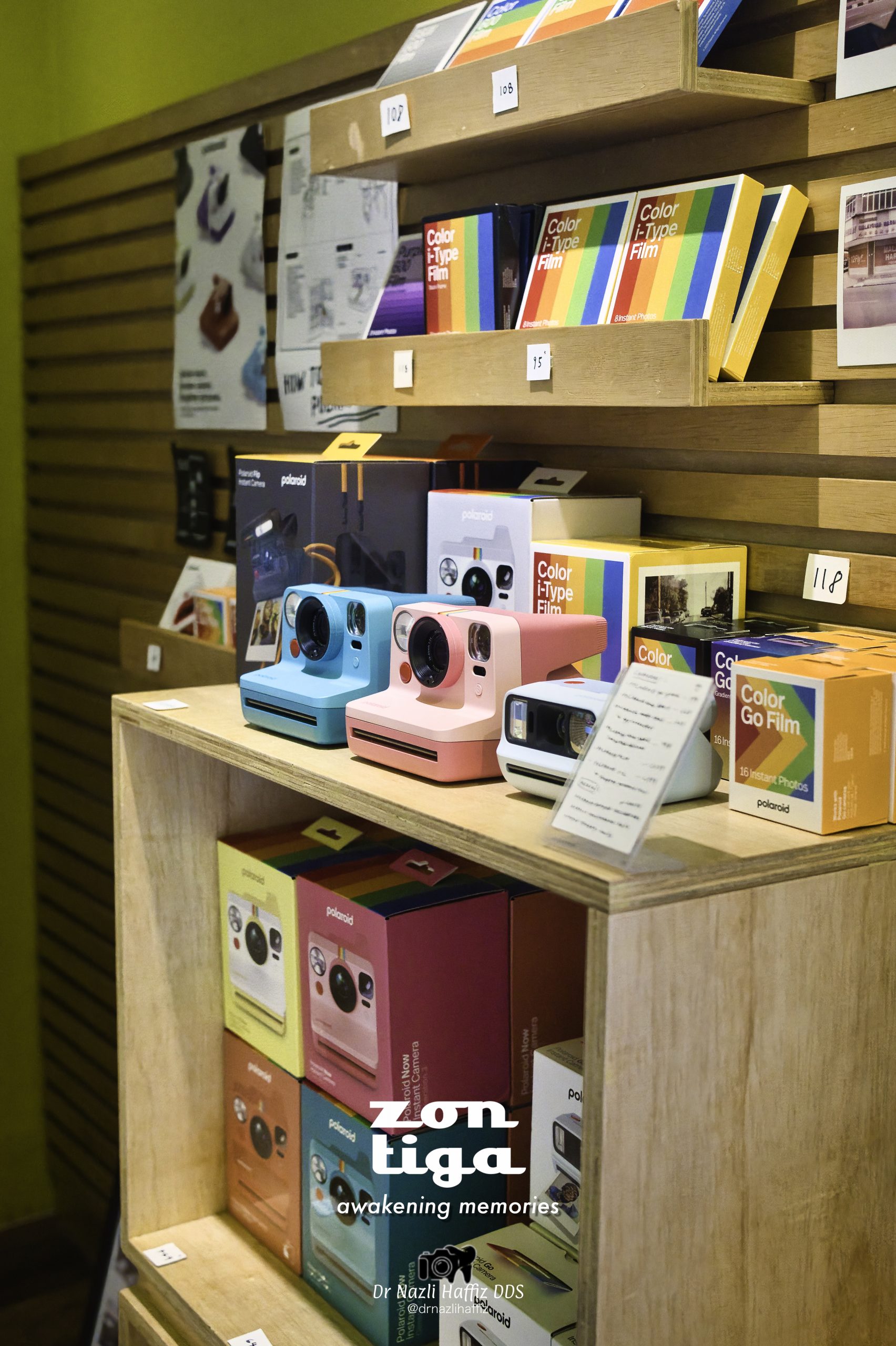
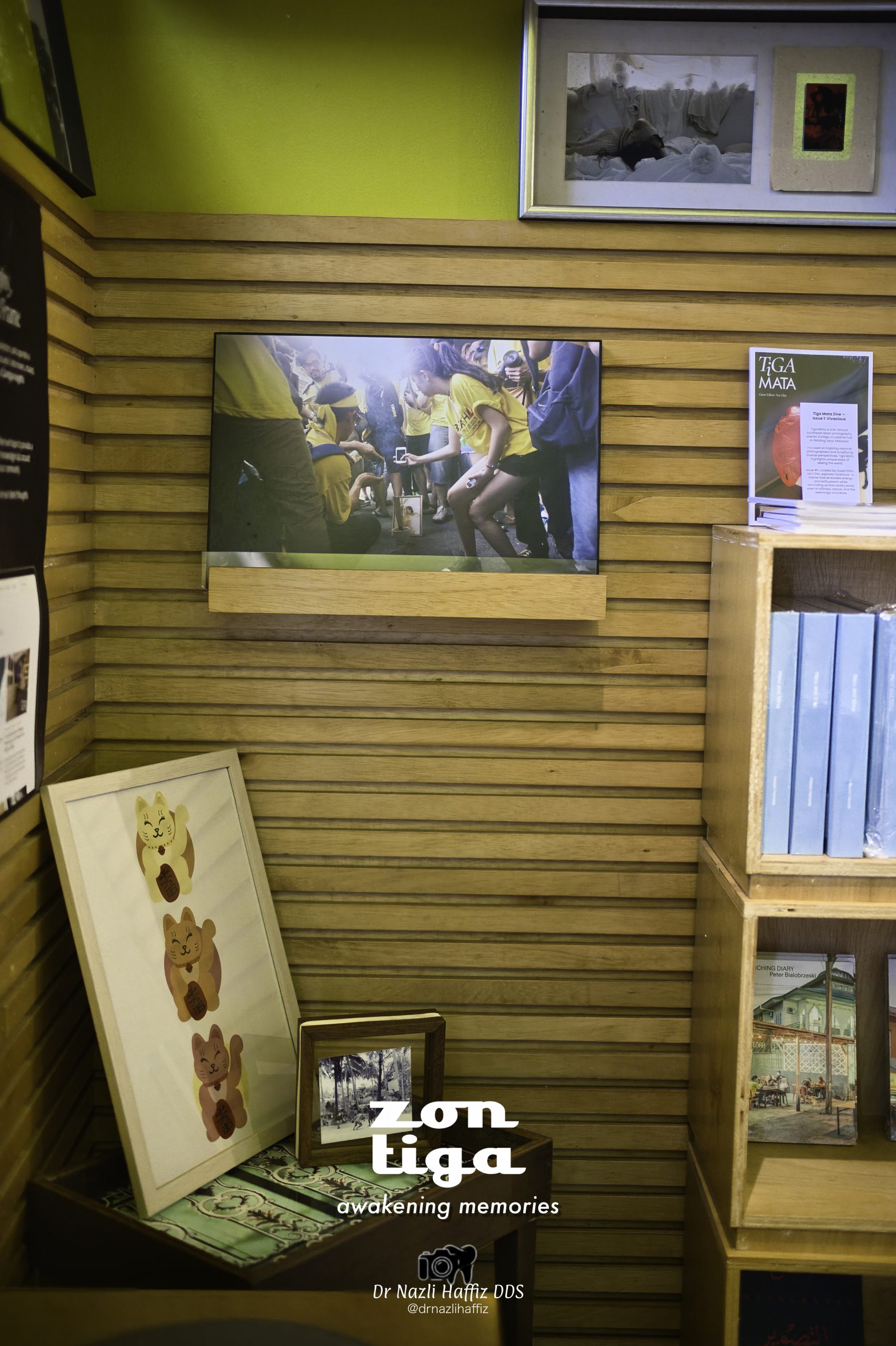
Move deeper into the enclave, and the atmosphere thickens with intimacy. Whimsical touches — like a silent procession of golden lucky cats keeping watch over local art prints — punctuate the warm, slatted wooden walls. The air vibrates with the tactile friction of creation: classic green disposable cameras resting beside playful sticker sheets, a service bell waiting to summon assistance, and a proud Malaysian flag standing guard over drop-off notes. Behind the glass of an arched wooden cabinet, vintage cameras sleep like museum artifacts, while the instant photography section hums with the promise of immediate, messy magic.
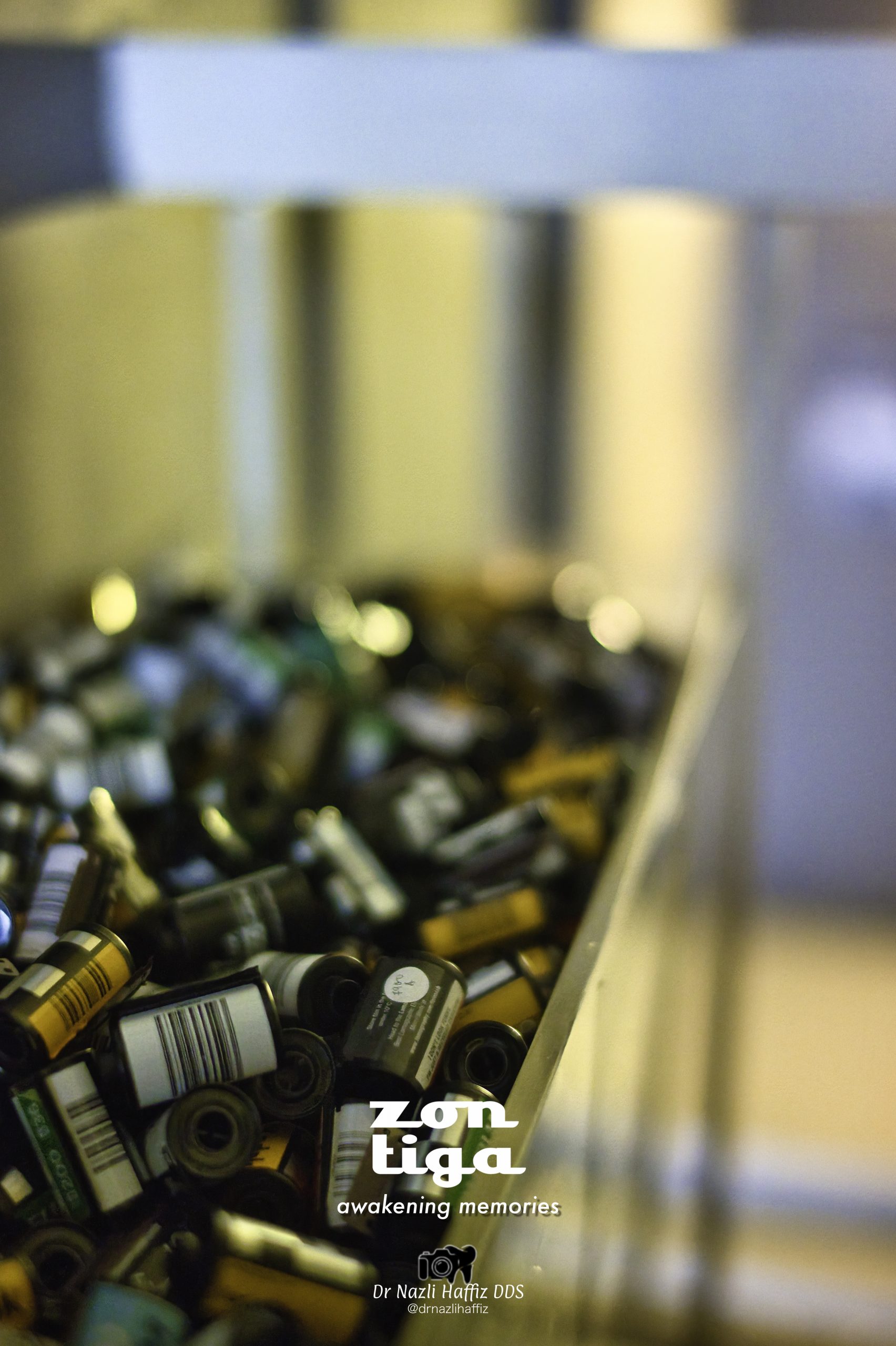
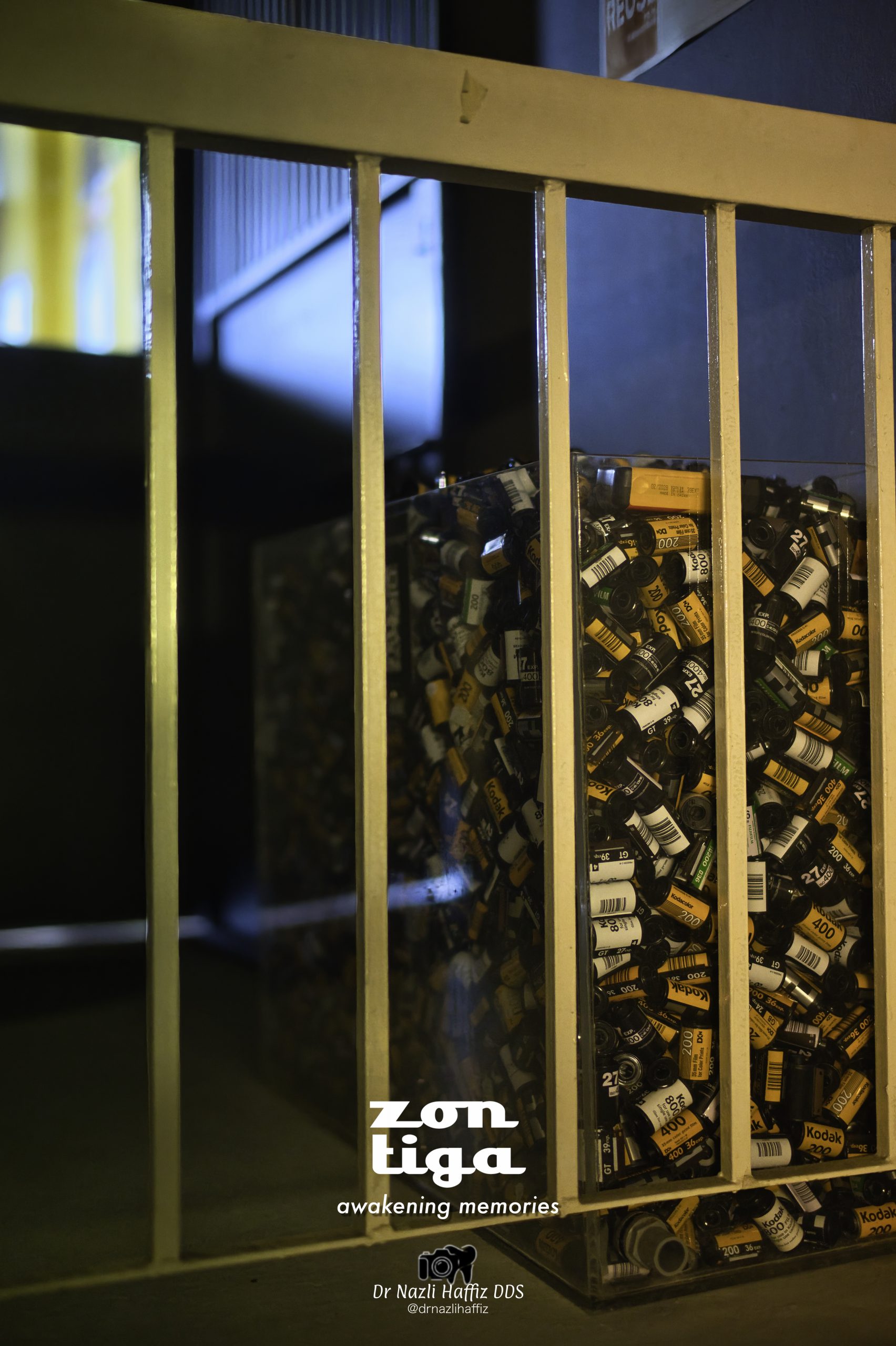
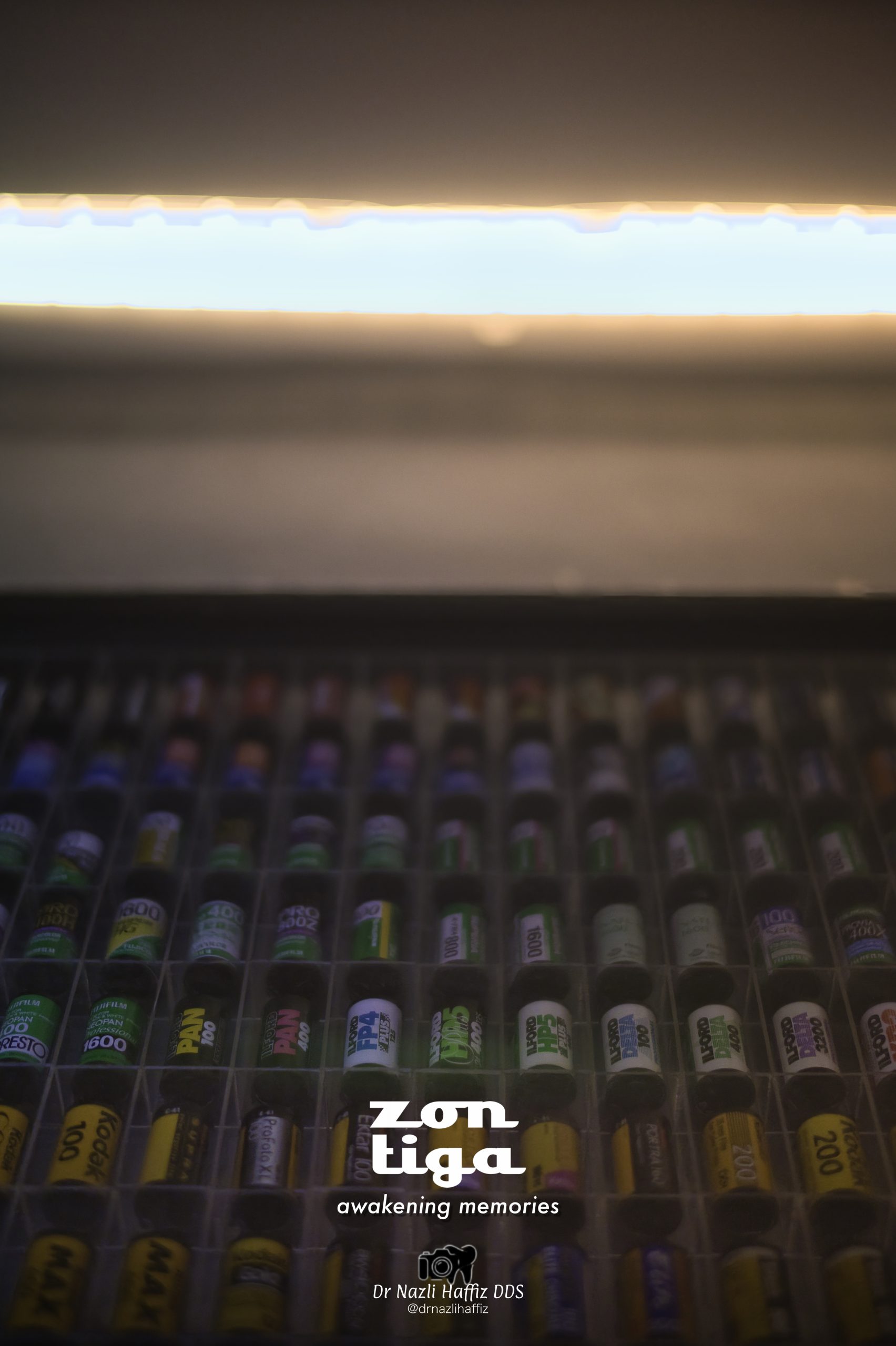
Yet, the true pulse of Zontiga beats right there at the main counter and within the open heart of the shop. Here, the physical monument to the community stands: clear acrylic sorting bins overflowing by the hundreds with spent, curled film canisters — yellow Kodak spirals, green Fuji tips, black-and-white metal tails — all piled together like fallen soldiers from a thousand unseen adventures. Organized developer trays map out the precise alchemy of 35mm and medium format, cradling Ilford and Portra under the clinical, benevolent gaze of inspection lamps.
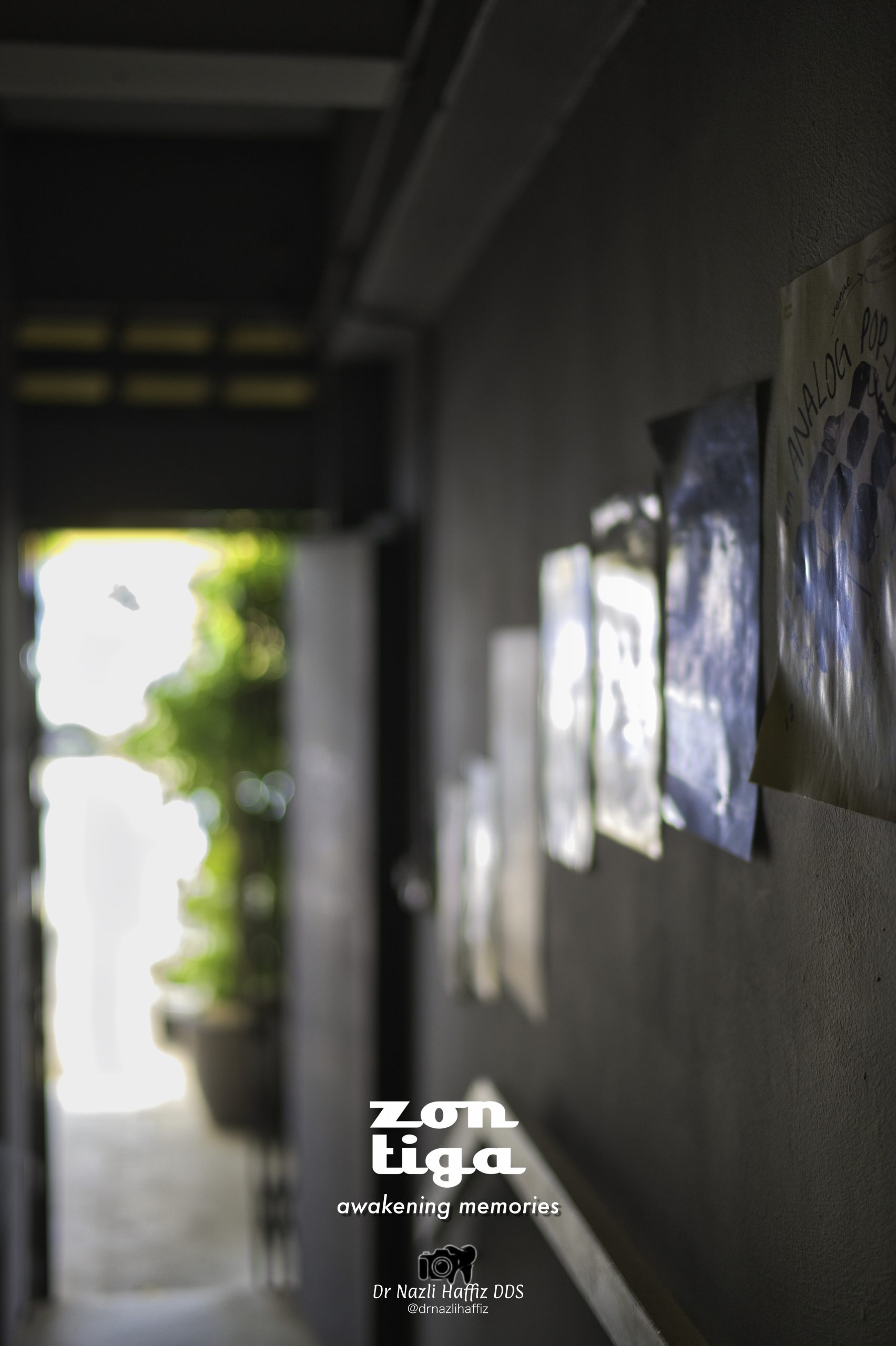
To walk back out through that concrete-walled hallway, past the experimental monochrome prints whispering from the shadows, is to step back into reality changed. You aren’t just carrying a plastic envelope of glossy scans. You are carrying fragments of your own life, translated through silver and steel, preserved by a sanctuary that reminds us why we started looking through a viewfinder in the first place.