There is a quiet, almost rebellious satisfaction in picking up a camera that refuses to treat you as a passive passenger in your own creative process. For years, the broader digital photography landscape drifted relentlessly into an era of smooth, featureless plastic slabs — sterile little electronic computers masquerading as image-making tools, where every vital exposure adjustment is buried behind layers of frustrating touchscreen menus or cowardly delegated to an overly confident, unpredictable autofocus algorithm.
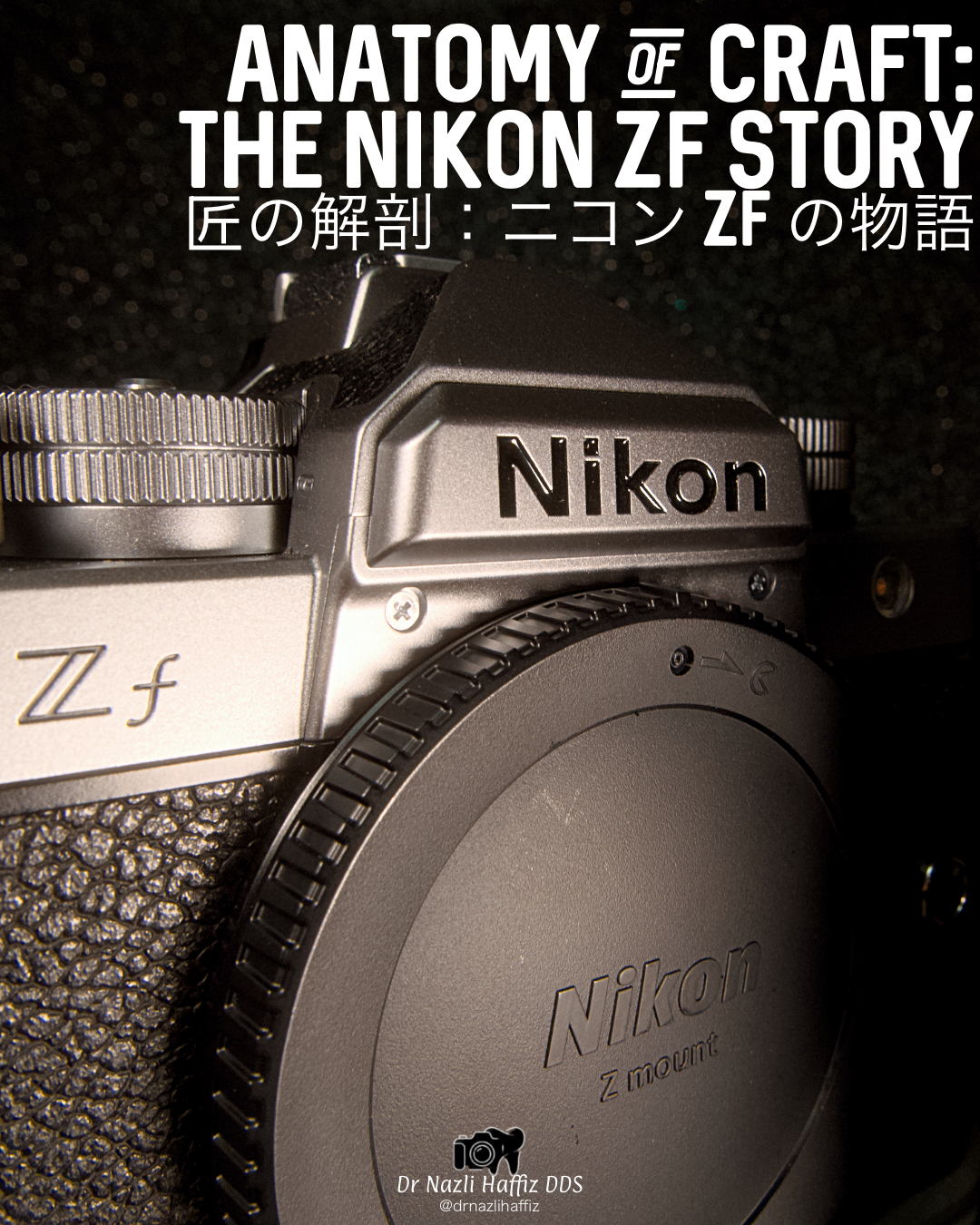
When Nikon dropped the Zf, they didn’t just stitch a superficial retro skin onto contemporary mirrorless guts in a cynical attempt to cash in on cheap, fleeting nostalgia. They built a serious instrument with an actual, beating mechanical pulse, forging a brilliant, unbreakable bridge between the raw, tactile grit of historical film bodies and the blistering, uncompromising speed and resolution of a modern full-frame sensor.
This body never gets treated like a delicate museum piece locked safely behind glass, nor is it coddled on a shelf just to look pretty. It is a true, hard-working daily tool that earns its keep across entirely different, demanding photographic disciplines. It rides along tucked safely in the bag for unpredictable street-walking sessions where fractions of a second decide whether a fleeting human moment is captured for eternity or lost forever to the ether. It anchors deliberate, slow-paced portrait sessions where establishing a genuine, unhurried connection with the human subject matters infinitely more than firing off an automated, high-speed machine-gun burst. And when the sun dips low beneath the horizon or the weekend finally arrives, it transitions seamlessly into delicate, painstaking macro work, letting me lose myself for hours in the microscopic geometry of vintage metal, miniature models, and intricate, weathered textures.
Beyond its physical versatility, carrying a camera like this completely changes the rhythm of how you operate in the field. When you are forced to consciously select your ISO, shutter speed, and aperture using physical brass and metal dials rather than scrolling through digital sub-menus, your brain stops treating photography as a mere data-collection exercise and starts operating on pure instinct and visual intuition. Every click of a detent ring, every tactile snap of the mechanical shutter release, and every subtle adjustment of the manual focus ring creates an unbroken, visceral feedback loop between your eye, your hand, and the final recorded frame. It becomes an extension of your own nervous system, reacting instantly to changing shadows, fleeting expressions, and intricate environmental details without any digital cognitive friction getting in the way.
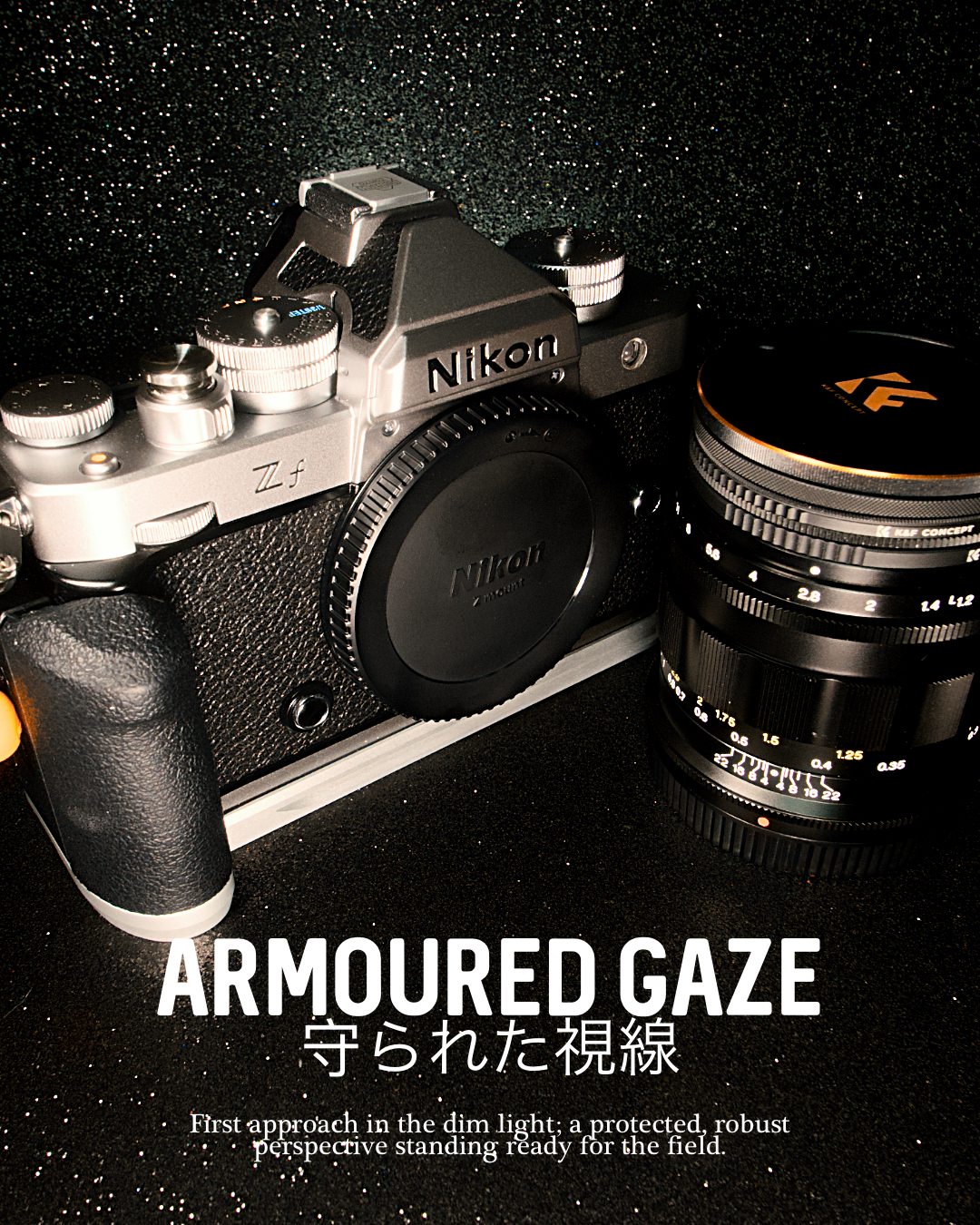
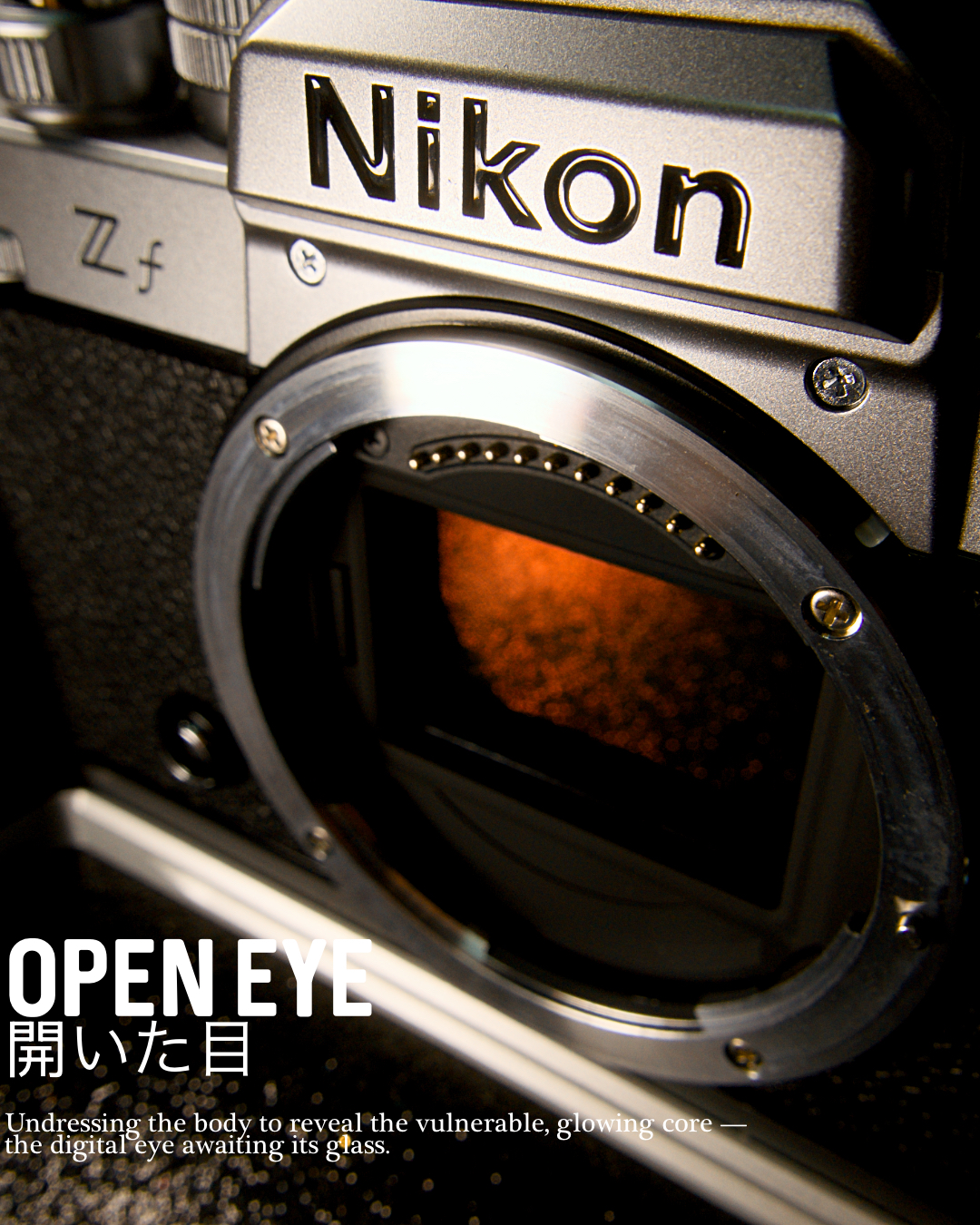
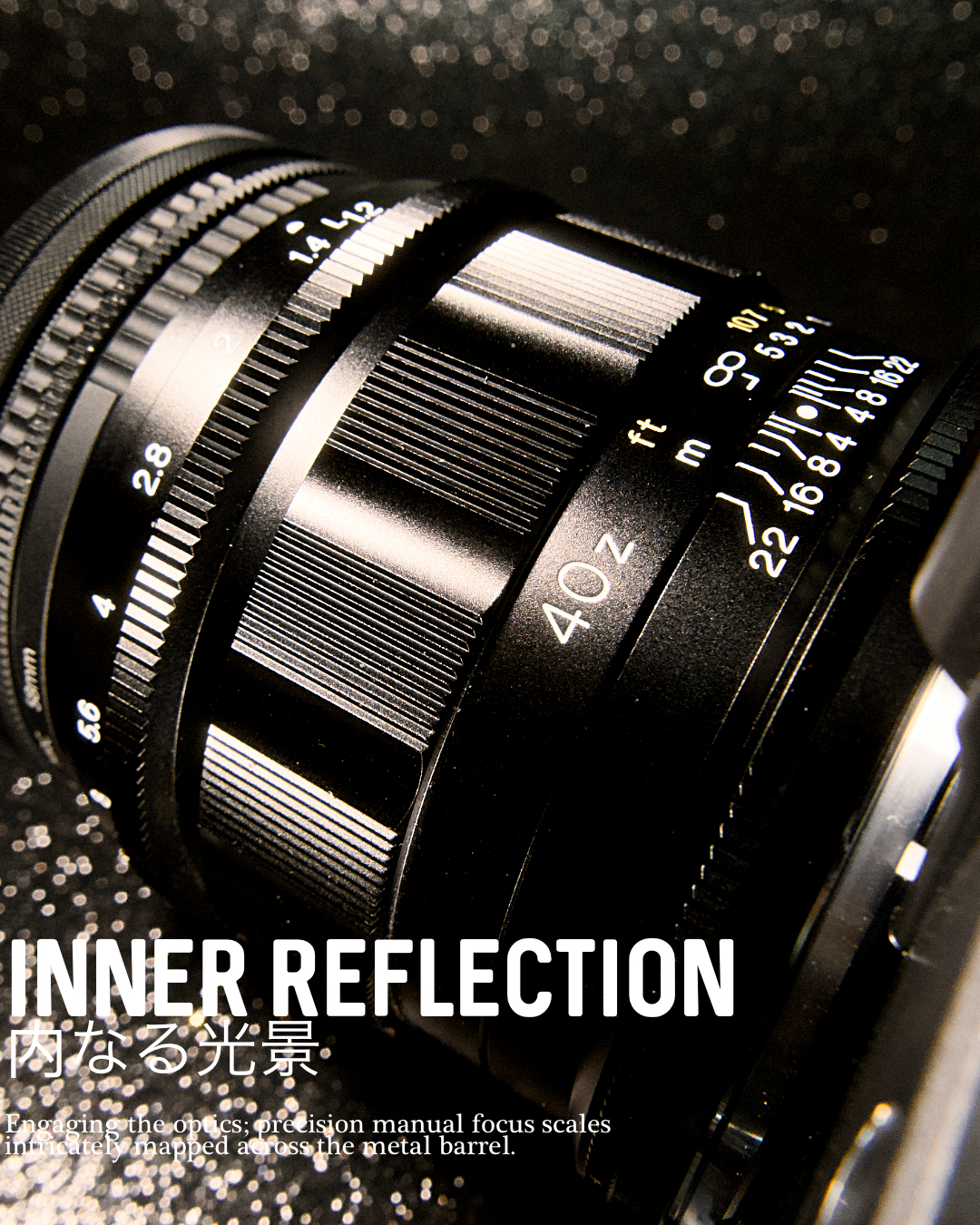
Pulling it out of the bag on a dim, quiet evening, ARMOURED GAZE captures that very first approach — a robust, heavily protected silhouette standing ready for whatever the unpredictable field throws at your feet. Twist off the body cap, and OPEN EYE strips away that protective outer shell to reveal the vulnerable, glowing core of the full-frame sensor waiting eagerly in the dark — a silent digital eye primed to consume and interpret whatever light you feed it. Paired up front with a manual-focus lens, INNER REFLECTION highlights those intricately mapped focus scales and hyperfocal markings etched with surgical precision across the heavy metal barrel, serving as a constant reminder that true sharpness isn’t an automated guess; it is earned directly by hand.
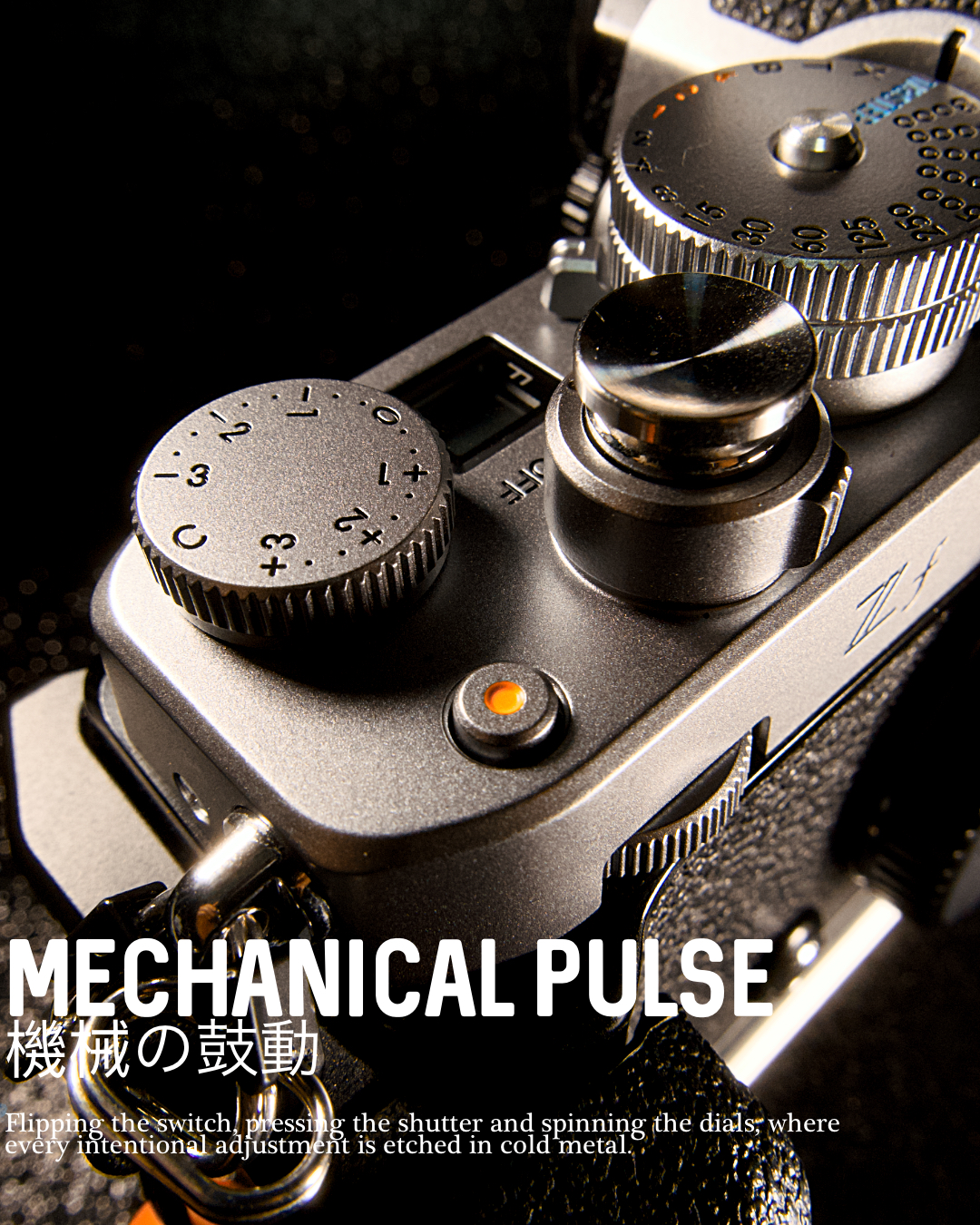
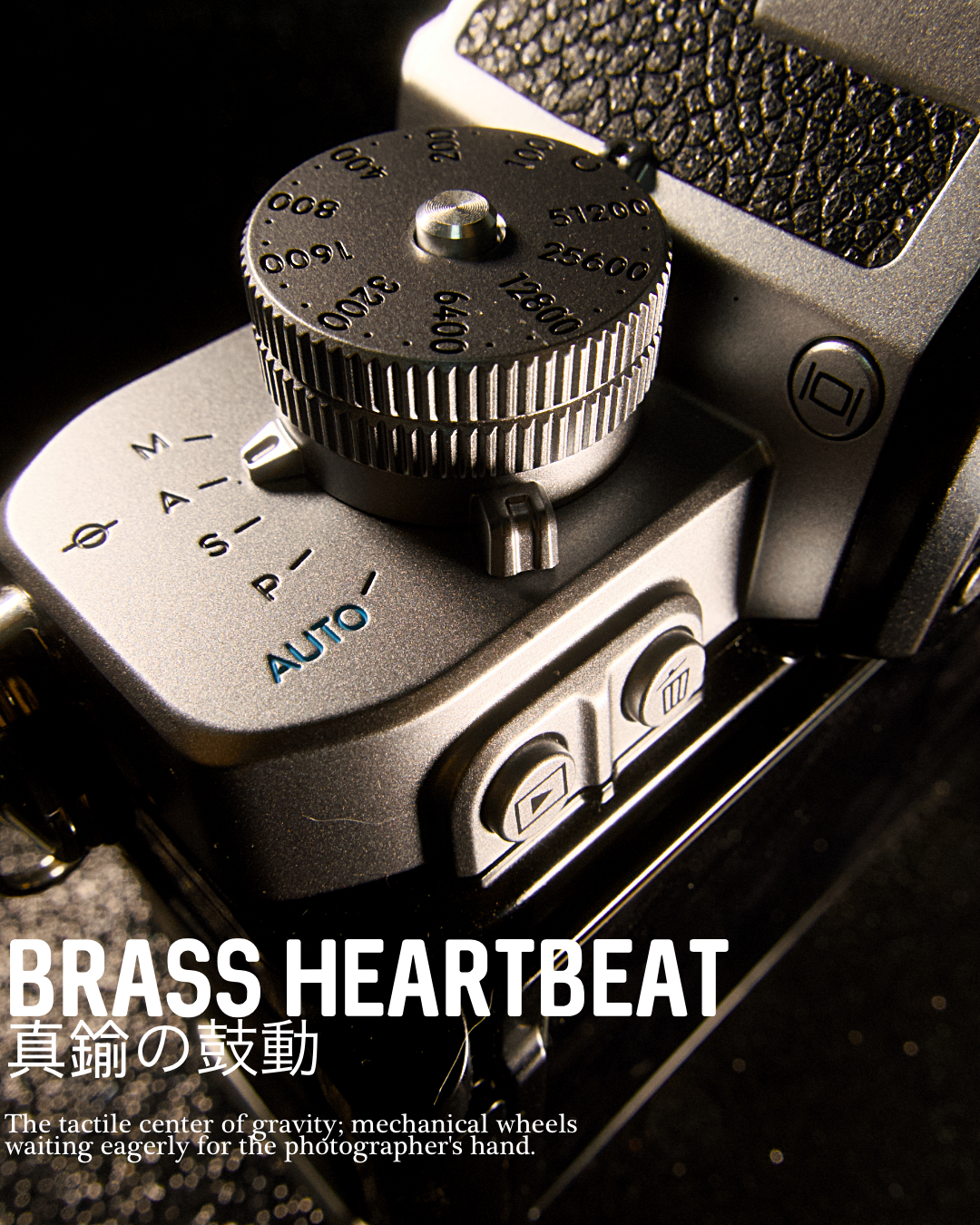
Then your fingertips find the physical controls, and the entire shooting experience shifts from a chore into a ritual. MECHANICAL PULSE celebrates that utterly addictive, rhythmic pre-shot ritual: flipping the mechanical power switch, pressing down the shutter release, and spinning brass-weighted dials where every single intentional adjustment — from shutter speed to exposure compensation — is physically etched into cold, satisfying metal. Looking across the top plate from a slightly elevated angle, BRASS HEARTBEAT lays bare the camera’s true tactile center of gravity, showcasing heavy mechanical wheels that seem to cry out for a photographer’s hand to claim them.
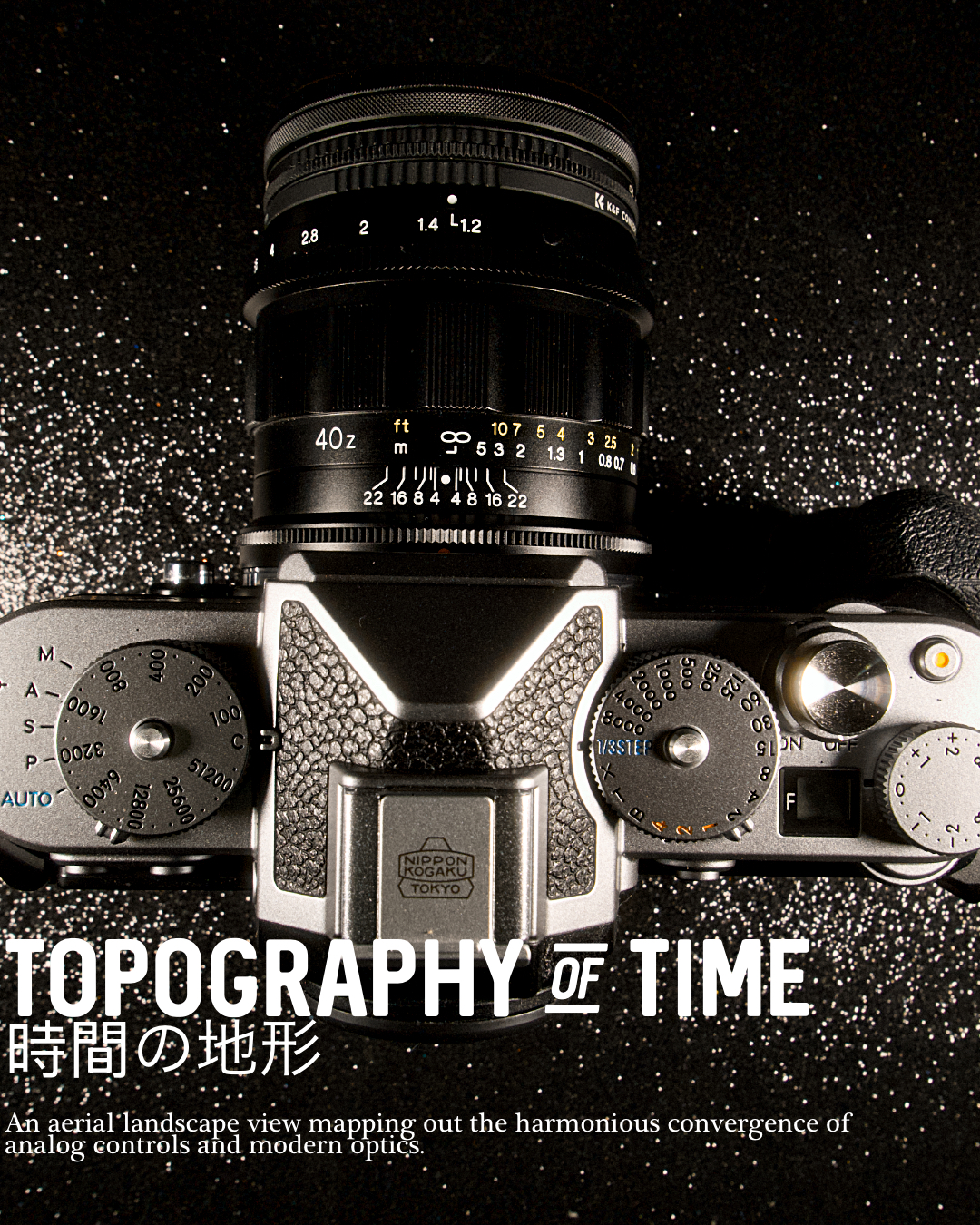
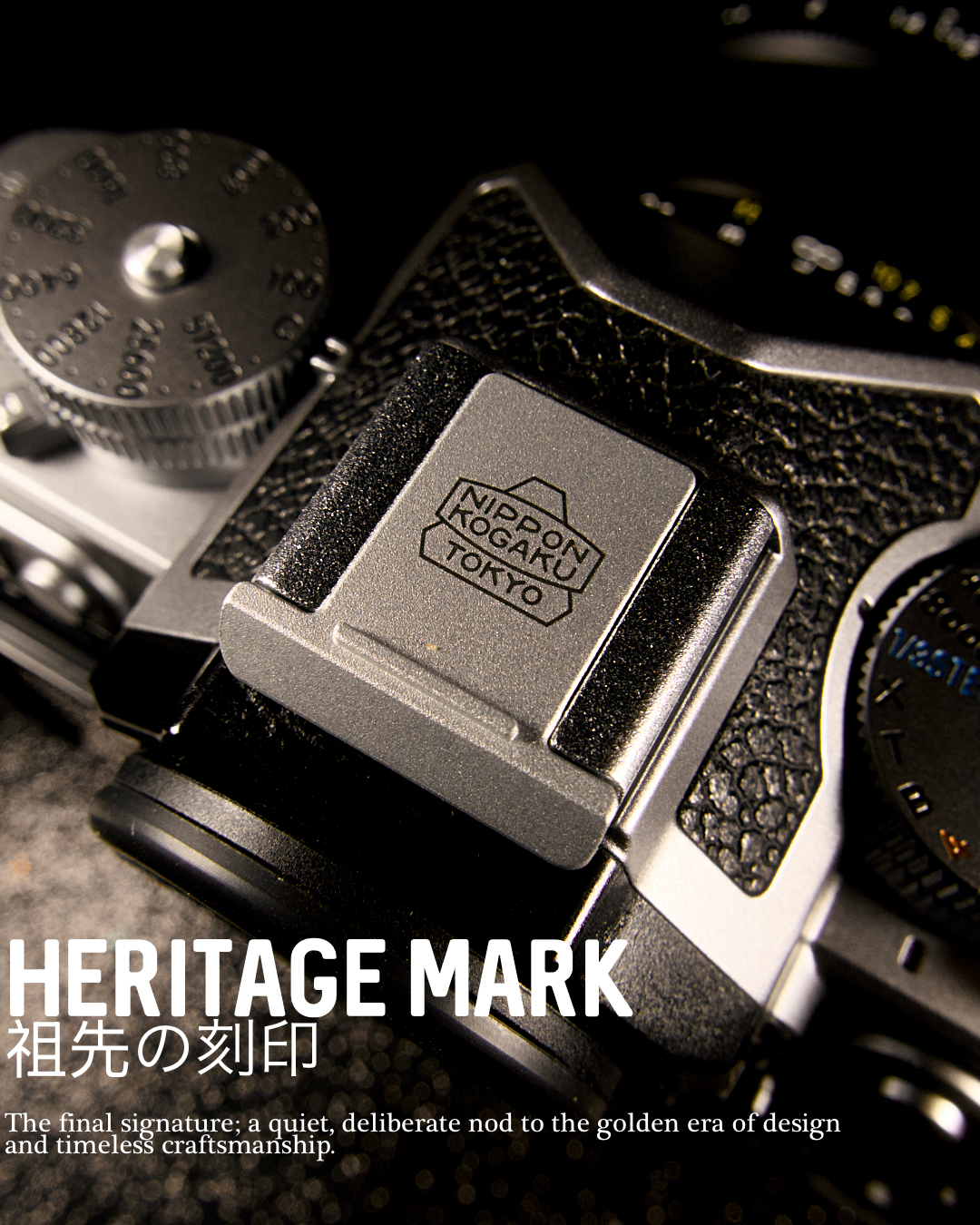
Taking a wider view of the layout, TOPOGRAPHY OF TIME maps out an aerial landscape view that showcases the harmonious, almost architectural convergence of analog dial styling and blistering optical performance. It is a layout that feels entirely natural, stripping away the cognitive friction of modern menus. Finally, HERITAGE MARK seals the entire design philosophy with a quiet, deliberate nod to Nippon Kogaku Tokyo, serving as a timeless signature of a golden era of industrial craftsmanship that refuses to be forgotten.
A camera like this fundamentally alters how you move through the world and interact with your environment. By forcing you to physically engage with every single exposure variable before the shutter even thinks about firing, photography stops being a mindless, automated reflex of endless spraying and praying. It transforms back into what it was always truly meant to be: an intentional, deliberate conversation between your own eyes and the falling light.